


Référence:
Kinésithérapie du sport - Évaluer, comprendre, traiter et réentraîner le membre inférieur
Kinésithérapie du sport - Évaluer, comprendre, traiter et réentraîner le membre inférieur
🎬 Création 2027 chez Kpten
★★★★★ Satisfaction moyenne en cours en 2027
⏱️ Durée : 4 jours de formation (26 heures)
👨🎓 Kinésithérapeutes DE
📍36, Rue des Cévennes. 75015 Paris
FIF-PL 2026 : 300€/jour (900€ maximum par an)
💶 Prix de la formation
- Une approche spécifiquement orientée vers l’évaluation et la prise en charge fonctionnelle du membre inférieur
- Une vision intégrée du genou, de la hanche, du pied et de la cheville
- Apprendre à identifier les facteurs locaux, proximaux et distaux pouvant contribuer aux symptômes
- Associer examen clinique, analyse du mouvement, thérapie manuelle, taping et exercice thérapeutique
- Une formation résolument pratique avec de nombreux ateliers entre participants
- Enseignée par Alfio Albasini, formateur international en thérapie manuelle
Aucun pré-requis spécifique en thérapie manuelle ou en taping n’est nécessaire.
À la fin de ces 4 jours de formation, vous serez capable de :
- réaliser un examen statique et dynamique du membre inférieur ;
- mettre en relation les résultats de l’examen avec les principales pathologies du genou, de la hanche et du pied ;
- identifier les facteurs locaux, proximaux et distaux susceptibles de participer à la symptomatologie ;
- intégrer l’analyse de la marche et du mouvement à l’examen clinique ;
- utiliser les principaux tests de différenciation clinique ;
- modifier les contraintes appliquées au membre inférieur par des techniques de thérapie manuelle et de taping ;
- développer le contrôle moteur du membre inférieur ;
- sélectionner et faire progresser les exercices en fonction d’objectifs de contrôle neuromusculaire, endurance, force, puissance et mobilité ;
- adapter le dosage et l’éducation du patient afin de favoriser la reprise fonctionnelle et de diminuer les comportements liés à la peur de la douleur.
Une approche globale du membre inférieur appliquée à la kinésithérapie du sport
Une douleur de genou vient-elle toujours du genou ?
Chez le sportif comme chez le patient actif, comprendre une douleur du membre inférieur nécessite souvent d’aller au-delà de la zone symptomatique.
Quel rôle joue la hanche ? Le pied ? La mobilité articulaire ? Le contrôle moteur ? La manière de marcher, courir ou se déplacer ?
Cette formation de 4 jours avec Alfio Albasini propose une approche intégrée de l’évaluation et du traitement du membre inférieur.
Le raisonnement clinique repose sur la recherche des différents facteurs locaux, proximaux et distaux susceptibles de contribuer aux symptômes. L’examen du genou est ainsi mis en relation avec celui de la hanche, du pied et de la cheville. Cette approche constitue l’un des fils conducteurs du programme original d’Alfio Albasini.
Une attention particulière est portée à l’examen statique et dynamique, à l’analyse de la marche, à la fonction musculaire et au contrôle moteur.
À partir des résultats de l’examen, le participant apprend à construire une prise en charge associant :
- thérapie manuelle
- techniques des tissus mous
- taping
- contrôle moteur
- exercice thérapeutique
- réentraînement fonctionnel
L’objectif n’est pas d’appliquer une succession de recettes thérapeutiques mais d’apprendre à choisir et faire progresser le traitement en fonction des résultats de l’examen clinique. C’est explicitement l’un des principes pédagogiques porté par Kpten depuis sa création.
🦵 Pathologies et situations cliniques abordées
Hanche
Conflit fémoro-acétabulaire (FAI) • arthrose de hanche • tendinopathie glutéale • tendinopathie des ischio-jambiers • situations de douleurs référées du membre inférieur.
Genou
Douleur fémoro-patellaire • arthrose fémoro-tibiale • instabilité et malalignement patellaire • irritation de la graisse de Hoffa • tendinopathie patellaire / jumper’s knee.
Pied et cheville
Tendinopathie d’Achille • fasciopathie plantaire • métatarsalgies • hallux valgus • hallux limitus/rigidus • syndrome de Morton.
👉 Lien vers le programme de Kinésithérapie du sport - Évaluer, comprendre, traiter et réentraîner le membre inférieur
➡️ Points clés :
| Nombre de jours de formation | 4 jours (26 heures présentielles) |
| Aide financière | FIF-PL à hauteur de 300€/jour (900€ maximum par an) |
| Séminaire | à compléter par le séminaire sur le membre supérieur |
Cet emploi du temps est donné à titre indicatif et peut être adapté en fonction des questions posées et du groupe. Les horaires pouvant varier de 15 à 30 minutes.
Jour 1
9h00 – 12h30 Introduction et présentation de la formation
Théorie et évolution de la prise en charge de la douleur fémoro-patellaire
- Évolution de la compréhension, de l’évaluation et du traitement de la douleur fémoro-patellaire de 1984 à aujourd’hui
- Évolution des connaissances scientifiques et recommandations cliniques internationales
- Biomécanique de la patella et de l’articulation fémoro-patellaire
- Interactions entre patella, fémur et tibia
- Identification des facteurs proximaux, locaux et distaux pouvant influencer la douleur fémoro-patellaire et fémoro-tibiale
Pratique clinique
Examen clinique du membre inférieur : approche multimodale d’évaluation et de traitement
Pour comprendre l’origine et les facteurs contribuant à la douleur, l’évaluation ne se limite pas à la zone symptomatique. Elle intègre notamment l’articulation fémoro-patellaire, mais également la hanche, le tronc, le pied et la cheville.
- Ateliers pratiques entre participants
13h00 – 17h00 Pratique clinique
Poursuite de l’examen clinique du membre inférieur
- Évaluation articulaire : articulation fémoro-patellaire et articulation fémoro-tibiale
- Analyse dynamique du mouvement
- Analyse de la marche
- Ateliers pratiques entre participants
Fin du jour 1
Jour 2 – Genou : diagnostic différentiel et traitement
9h00 – 12h30 Pratique clinique
Diagnostic différentiel : tendinopathie patellaire ou irritation de la graisse de Hoffa ?
- Présentation théorique
- Examen clinique et traitement du membre inférieur
- Intégration des facteurs locaux, proximaux et distaux dans le raisonnement clinique
- Traitements physiques du membre inférieur
- Mobilisations articulaires
- Techniques des tissus mous
- Ateliers pratiques entre participants
13h30 – 17h00 Pratique clinique
Traitement et rééducation du membre inférieur
- Évaluation de la fonction musculaire et de la souplesse
- Rééducation du contrôle moteur du quadriceps et des muscles de la hanche
- Travail pratique avec EMG de surface
- Ateliers pratiques entre participants
- Revue de la littérature : que nous disent les données scientifiques ?
- Présentation théorique et mise en pratique
Fin du jour 2
Jour 3 – Pied et cheville
9h00 – 12h30 Biomécanique et examen clinique du pied
- Présentation théorique de la biomécanique du pied
- Examen clinique du pied
- Évaluation de l’alignement statique et dynamique
- Analyse de la marche
- Tests cliniques : Hallux Test, Navicular Drop Test, théorie de Root, Wall Test
- Ateliers pratiques entre participants
13h30 – 17h00 Pratique clinique : traitement du pied
- Mobilisations articulaires
- Techniques des tissus mous
- Taping correctif de l’avant-pied et de l’arrière-pied
- Taping correctif pour l’hallux valgus et le syndrome de Morton
- Taping TDT et lien avec l’utilisation d’orthèses plantaires
- Principes d’adaptation et de mise en place d’une orthèse plantaire
- Fonction musculaire et rééducation du contrôle moteur
- Ateliers pratiques entre participants
- Revue de la littérature : que nous disent les données scientifiques ?
Fin du jour 3
Jour 4 – Hanche
9h00 – 12h30 Biomécanique et examen clinique de la hanche
- Présentation théorique de la biomécanique de la hanche
- Examen clinique de la hanche
- Évaluation de l’alignement statique et dynamique
- Analyse de la marche
- Quadrant test
- Tests cliniques du conflit fémoro-acétabulaire (FAI)
- Test de FABER
- Tests cliniques des tendinopathies glutéales et des ischio-jambiers
- Ateliers pratiques entre participants
13h30 – 16h00 Pratique clinique : traitement
- Mobilisations articulaires
- Techniques des tissus mous
- Taping visant l’inhibition des adducteurs, du tenseur du fascia lata (TFL) et de la bandelette ilio-tibiale
- Taping dans les bursopathies et tendinopathies
- Taping des rotateurs externes
- Fonction musculaire et rééducation du contrôle moteur
- Ateliers pratiques entre participants
- Revue de la littérature : que nous disent les données scientifiques ?
- Synthèse de la formation, questions et conclusion
Fin du jour 4
- Enseignement par diaporamas
- Démonstrations pratiques
- Cas cliniques
Entre binômes de participants et sous contrôle de l'intervenant pour les sessions pratiques.
➡️ Références générales neurodynamique
1. Nee, RJ, Coppieters, MW, Boyd, BS, Reliability of the straight leg raise test for suspected lumbar radicular pain: A systematic review with meta-analysis. Musculoskelet Sci Pract, 2022. 59: p. 102529.
2. de la Rosa-Díaz, I, Torres-Lacomba, M, Acosta-Ramírez, P, Orive, IG, Nee, RJ, de la Villa-Polo, P, Andrés-Esteban, EM, Sánchez-Sánchez, B, Protective myoelectric activity at performing upper limb neurodynamic test 1 in breast cancer survivors. A cross-sectional observational study. Musculoskelet Sci Pract, 2018. 36: p. 68-80.
3. Boyd, BS, Wanek, L, Gray, AT, Topp, KS, Mechanosensitivity during lower extremity neurodynamic testing is diminished in individuals with Type 2 Diabetes Mellitus and peripheral neuropathy: a cross sectional study. BMC Neurol, 2010. 10: p. 75.
4. Lewis, KJ, Coppieters, MW, Ross, L, Hughes, I, Vicenzino, B, Schmid, AB, Group education, night splinting and home exercises reduce conversion to surgery for carpal tunnel syndrome: a multicentre randomised trial. J Physiother, 2020. 66(2): p. 97-104.
5. Tamburin, S, Park, SB, Schenone, A, Mantovani, E, Hamedani, M, Alberti, P, Yildiz-Kabak, V, Kleckner, IR, Kolb, N, Mazzucchelli, M, McNeish, BL, Argyriou, AA, Cavaletti, G, Hoke, A, Toxic Neuropathy, C, Rehabilitation, exercise, and related non-pharmacological interventions for chemotherapy-induced peripheral neurotoxicity: Systematic review and evidence-based recommendations. Crit Rev Oncol Hematol, 2022. 171: p. 103575.
6. Jahantigh Akbari, N, Hosseinifar, M, Naimi, SS, Mikaili, S, Rahbar, S, The efficacy of physiotherapy interventions in mitigating the symptoms and complications of diabetic peripheral neuropathy: A systematic review. J Diabetes Metab Disord, 2020. 19(2): p. 1995-2004.
7. Park, SB, Goldstein, D, Krishnan, AV, Lin, CS, Friedlander, ML, Cassidy, J, Koltzenburg, M, Kiernan, MC, Chemotherapy-induced peripheral neurotoxicity: a critical analysis. CA Cancer J Clin, 2013. 63(6): p. 419-37.
8. Baselgia, LT, Bennett, DL, Silbiger, RM, Schmid, AB, Negative Neurodynamic Tests Do Not Exclude Neural Dysfunction in Patients With Entrapment Neuropathies. Arch Phys Med Rehabil, 2017. 98(3): p. 480-486.
9. Chao, CC, Tseng, MT, Lin, YH, Hsieh, PC, Lin, CJ, Huang, SL, Hsieh, ST, Chiang, MC, Brain imaging signature of neuropathic pain phenotypes in small-fiber neuropathy: altered thalamic connectome and its associations with skin nerve degeneration. Pain, 2020.
10. Schmid, AB, Elliott, JM, Strudwick, MW, Little, M, Coppieters, MW, Effect of splinting and exercise on intraneural edema of the median nerve in carpal tunnel syndrome--an MRI study to reveal therapeutic mechanisms. J Orthop Res, 2012. 30(8): p. 1343-50.
11. da Silva, JT, Santos, FM, Giardini, AC, Martins Dde, O, de Oliveira, ME, Ciena, AP, Gutierrez, VP, Watanabe, IS, Britto, LR, Chacur, M, Neural mobilization promotes nerve regeneration by nerve growth factor and myelin protein zero increased after sciatic nerve injury. Growth Factors, 2015. 33(1): p. 8-13.
12. Zhu, GC, Tsai, KL, Chen, YW, Hung, CH, Neural Mobilization Attenuates Mechanical Allodynia and Decreases Proinflammatory Cytokine Concentrations in Rats With Painful Diabetic Neuropathy. Phys Ther, 2018. 98(4): p. 214-222.
13. Giardini, AC, Dos Santos, FM, da Silva, JT, de Oliveira, ME, Martins, DO, Chacur, M, Neural Mobilization Treatment Decreases Glial Cells and Brain-Derived Neurotrophic Factor Expression in the Central Nervous System in Rats with Neuropathic Pain Induced by CCI in Rats. Pain Res Manag, 2017. 2017: p. 7429761.
14. Santos, FM, Silva, JT, Giardini, AC, Rocha, PA, Achermann, AP, Alves, AS, Britto, LR, Chacur, M, Neural mobilization reverses behavioral and cellular changes that characterize neuropathic pain in rats. Mol Pain, 2012. 8: p. 57.
15. Elvey, RL, Physical evaluation of the peripheral nervous system in disorders of pain and dysfunction.J.Hand Ther., 1997. 10(2): p. 122-129.
16. Butler, DS, The sensitive nervous system. 1st ed. ed. 2000, Unley, S. Aust.: Noigroup Publications.
17. Smart, K, Blake, C, Staines, A, Doody, C, Clinical indicators of 'nociceptive', 'peripheral neuropathic' and 'central' mechanisms of musculoskeletal pain. A Delphi survey of expert clinicians. Manual Therapy, 2010. 15: p. 80-87.
18. Nee, RJ, Yang, CH, Liang, CC, Tseng, GF, Coppieters, MW, Impact of order of movement on nerve strain and longitudinal excursion: a biomechanical study with implications for neurodynamic test sequencing.Man Ther, 2010. 15(4): p. 376-81.
19. Lohman, CM, Gilbert, KK, Sobczak, S, Brismee, JM, James, CR, Day, M, Smith, MP, Taylor, L, Dugailly, PM, Pendergrass, T, Sizer, PJ, 2015 Young Investigator Award Winner: Cervical Nerve Root Displacement and Strain During Upper Limb Neural Tension Testing: Part 1: A Minimally Invasive Assessment in Unembalmed Cadavers. Spine (Phila Pa 1976), 2015. 40(11): p. 793-800.
20. Manvell, N, Manvell, JJ, Snodgrass, SJ, Reid, SA, Tension of the ulnar, median, and radial nerves during ulnar nerve neurodynamic testing: observational cadaveric study. Phys Ther, 2015. 95(6): p. 891-900.
21. Gilbert, KK, Brismee, JM, Collins, DL, James, CR, Shah, RV, Sawyer, SF, Sizer, PS, Jr., 2006 Young Investigator Award Winner: lumbosacral nerve root displacement and strain: part 2. A comparison of 2 straight leg raise conditions in unembalmed cadavers. Spine, 2007. 32(14): p. 1521-5.
22. Boyd, BS, Topp, KS, Coppieters, MW, Impact of movement sequencing on sciatic and tibial nerve strain and excursion during the straight leg raise test in embalmed cadavers. J Orthop Sports Phys Ther, 2013. 43(6): p. 398-403.
23. Coppieters, MW, Andersen, LS, Johansen, R, Giskegjerde, PK, Hoivik, M, Vestre, S, Nee, RJ, Excursion of the Sciatic Nerve During Nerve Mobilization Exercises: An In Vivo Cross-sectional Study Using Dynamic Ultrasound Imaging. J Orthop Sports Phys Ther, 2015. 45(10): p. 731-7.
24. Ridehalgh, C, Moore, A, Hough, A, Sciatic nerve excursion during a modified passive straight leg raise test in asymptomatic participants and participants with spinally referred leg pain. Man Ther, 2015. 20(4): p. 564-9.
25. Andrade, RJ, Nordez, A, Hug, F, Ates, F, Coppieters, MW, Pezarat-Correia, P, Freitas, SR, Non-invasive assessment of sciatic nerve stiffness during human ankle motion using ultrasound shear wave elastography. J Biomech, 2016. 49(3): p. 326-31.
26. Silva, A, Manso, A, Andrade, R, Domingues, V, Brandao, MP, Silva, AG, Quantitative in vivo longitudinal nerve excursion and strain in response to joint movement: A systematic literature review. Clin Biomech (Bristol, Avon), 2014. 29(8): p. 839-47.
27. Coppieters, MW, Hough, AD, Dilley, A, Different nerve-gliding exercises induce different magnitudes of median nerve longitudinal excursion: an in vivo study using dynamic ultrasound imaging. J Orthop Sports Phys Ther, 2009. 39(3): p. 164-71.
28. Hall, TM, Elvey, RL, Nerve trunk pain: physical diagnosis and treatment. Man Ther, 1999. 4(2): p. 63-73.
29. Maitland, G, Negative disc exploration: positive canal signs. Australian Journal of Physiotherapy, 1979. 25(3): p. 129-134.
30. Maitland, G, The slump test: examination and treatment. The Australian Journal of Physiotherapy, 1985. 31(6): p. 215-219.
31. Troup, JD, Straight-leg-raising (SLR) and the qualifying tests for increased root tension: their predictive value after back and sciatic pain. Spine, 1981. 6(5): p. 526-7.
32. Coppieters, MW, Alshami, AM, Babri, AS, Souvlis, T, Kippers, V, Hodges, PW, Strain and excursion of the sciatic, tibial, and plantar nerves during a modified straight leg raising test. J Orthop Res, 2006. 24(9): p. 1883-9.
33. Alshami, AM, Babri, AS, Souvlis, T, Coppieters, MW, Strain in the tibial and plantar nerves with foot and ankle movements and the influence of adjacent joint positions. J Appl Biomech, 2008. 24(4): p. 368-76.
34. Nee, RJ, Jull, GA, Vicenzino, B, Coppieters, MW, The validity of upper-limb neurodynamic tests for detecting peripheral neuropathic pain. J Orthop Sports Phys Ther, 2012. 42(5): p. 413-24.
35. American Physical Therapy Association. Guide to Physical Therapist Practice 3.0. 2014 [cited 2016 July 15]; Available from: http://guidetoptpractice.apta.org.
36. Childs, JD, Cleland, JA, Elliott, JM, Teyhen, DS, Wainner, RS, Whitman, JM, Sopky, BJ, Godges, JJ, Flynn, TW, Neck pain: Clinical practice guidelines linked to the International Classification of Functioning, Disability, and Health from the Orthopedic Section of the American Physical Therapy Association. J Orthop Sports Phys Ther, 2008. 38(9): p. A1-A34.
37. Delitto, A, George, S, Van Dillen, L, Whitman, J, Sowa, G, Shekelle, P, Denninger, T, Godges, J, Low back pain: clinical practice guidelines linked to the International Classification of Functioning, Disability, and Health from the Orthopaedic Section of the American Physical Therapy Association. Journal of Orthopaedic and Sports Physical Therapy, 2012. 42(4): p. A1-A57.
38. Martin, R, Davenport, T, Reischl, S, McPoil, T, Matheson, J, Wukich, D, McDonough, C, Heel pain - plantar fasciitis: Revision 2014 Clinical Practice Guidelines Linked to the International Classification of Functioning, Disability and Health from the Orthopaedic Section of the American Physical Therapy Association. Journal of Orthopaedic and Sports Physical Therapy, 2014. 44: p. A1-A23.
39. Boyd, B, Wanek, L, Gray, A, Topp, K, Mechanosensitivity of the lower extremity nervous system during straight-leg raise neurodynamic testing in healthy individuals. Journal of Orthopaedic and Sports Physical Therapy, 2009. 39(11): p. 780-790.
40. Walsh, J, Hall, T, Agreement and correlation between the straight leg raise and slump tests in subjects with leg pain. Journal of Manipulative and Physiological Therapeutics, 2009. 32: p. 184-192.
41. Boyd, B, Villa, P, Normal inter-limb differences during the straight leg raise neurodynamic test: a cross sectional study. BMC Musculoskeletal Disorders, 2012. 13: p. 245.
42. Lopez-de-Uralde-Vallanueva, I, Beltran-Alacreu, H, Fernandez-Carnero, J, Gil-Martinez, A, La Touche, R, Differences in neural mechanosensitivity between patients with chronic nonspecific neck pain with and without neuropathic features. A descriptive cross-sectional study. Pain Medicine, 2016. 17: p. 136-148.
43. Sierra-Silvestre, E, Torres Lacomba, M, de la Villa Polo, P, Effect of leg dominance, gender and age on sensory responses to structural differentiation of straight leg raise test in asymptomatic subjects: a cross-sectional study. Journal of Manual and Manipulative Therapy, 2017. 25: p. 91-97.
44. Tong, M, Liu, V, Hall, T, Side-to-side range of movement variability in an ulnar neurodynamic test sequence variant in asymptomatic people. Hong Kong Physiotherapy Journal, 2018. 38: p. 133-139.
45. Ekedahl, K, Jönsson, B, Frobell, R, Validity of the fingertip-to-floor test and straight leg raising test in patients with acute and subacute low back pain: a comparison by sex and radicular pain. Archives of Physical Medicine and Rehabilitation, 2010. 91: p. 1243-1247.
46. Ekedahl, H, Jönsson, B, Frobell, R, Fingertip-to-floor and straight leg raising test: validity, responsiveness, and predictive value in patients with acute/subacute low back pain. Archives of Physical Medicine and Rehabilitation, 2012. 93: p. 2210-2215.
47. Hines, T, Noakes, R, Manners, B, The Upper Limb Tension Test: inter-tester reliability for assessing the onset of passive resistance R 1. The journal of manual & manipulative therapy, 1993. 1(3): p. 95-98.
48. Vanti, C, Conteddu, L, Guccione, A, Morsillo, F, Parazza, S, Viti, C, Pillastrini, P, The upper limb neurodynamic test I: intra- and intertester reliability and the effect of several repetitions on pain and resistance. Journal of Manipulative and Physiological Therapeutics, 2010. 33(4): p. 292-299.
49. Davis, DS, Anderson, IB, Carson, MG, Elkins, CL, Stuckey, LB, Upper Limb Neural Tension and Seated Slump Tests: The False Positive Rate among Healthy Young Adults without Cervical or Lumbar Symptoms. J Man Manip Ther, 2008. 16(3): p. 136-41.
50. Wainner, RS, Fritz, JM, Irrgang, JJ, Boninger, ML, Delitto, A, Allison, S, Reliability and diagnostic accuracy of the clinical examination and patient self-report measures for cervical radiculopathy. Spine, 2003. 28(1): p. 52-62.
51. Apelby-Albrecht, M, Andersson, L, Kleiva, IW, Kvale, K, Skillgate, E, Josephson, A, Concordance of upper limb neurodynamic tests with medical examination and magnetic resonance imaging in patients with cervical radiculopathy: a diagnostic cohort study. J Manipulative Physiol Ther, 2013. 36(9): p. 626-32.
52. Sleijser-Koehorst, MLS, Coppieters, MW, Epping, R, Rooker, S, Verhagen, AP, Scholten-Peeters, GGM, Diagnostic accuracy of patient interview items and clinical tests for cervical radiculopathy. Physiotherapy, 2021. 111: p. 74-82.
53. Dilley, A, Lynn, B, Pang, SJ, Pressure and stretch mechanosensitivity of peripheral nerve fibres following local inflammation of the nerve trunk. Pain, 2005. 117(3): p. 462-72.
54. Walsh, J, Hall, T, Reliability, validity and diagnostic accuracy of palpation of the sciatic, tibial and common peroneal nerves in the examination of low back related leg pain. Man Ther, 2009. 14(6): p. 623-9.
55. Jesson, T, Runge, N, Schmid, AB, Physiotherapy for people with painful peripheral neuropathies: A narrative review of its efficacy and safety. Pain Reports Online, 2020.
56. Coppieters, MW, Butler, DS, Do 'sliders' slide and 'tensioners' tension? An analysis of neurodynamic techniques and considerations regarding their application. Man Ther, 2008. 13(3): p. 213-21.
57. Elvey, RL, Treatment of arm pain associated with abnormal brachial plexus tension. Aust J Phys, 1986. 32(4): p. 225-230.
58. Coppieters, MW, Alshami, AM, Longitudinal excursion and strain in the median nerve during novel nerve gliding exercises for carpal tunnel syndrome. J Orthop Res, 2007. 25(7): p. 972-80.
59. Andersen, LS, Johansen, R, Giskegjerde, PK, Høivik, M, Vestre, S, Coppieters, M, Excursion of the sciatic nerve during nerve gliding exercises. An in vivo study using dynamic ultrasound imaging. (in preparation).
60. Ellis, R, Carta, G, Andrade, RJ, Coppieters, MW, Neurodynamics: is tension contentious? J Man Manip Ther, 2022. 30(1): p. 3-12.
61. Coppieters, MW, Stappaerts, KH, Wouters, LL, Janssens, K, The immediate effects of a cervical lateral glide treatment technique in patients with neurogenic cervicobrachial pain. J Orthop Sports Phys Ther, 2003. 33(7): p. 369-78.
62. Coppieters, MW, Stappaerts, KH, Wouters, LL, Janssens, K, Aberrant protective force generation during neural provocation testing and the effect of treatment in patients with neurogenic cervicobrachial pain. J Manipulative Physiol Ther, 2003. 26(2): p. 99-106.
63. Vicenzino, B, Collins, D, Wright, A, The initial effects of a cervical spine manipulative physiotherapy treatment on the pain and dysfunction of lateral epicondylalgia. Pain, 1996. 68(1): p. 69-74.
64. Sterling, M, Pedler, A, Chan, C, Puglisi, M, Vuvan, V, Vicenzino, B, Cervical lateral glide increases nociceptive flexion reflex threshold but not pressure or thermal pain thresholds in chronic whiplash associated disorders: A pilot randomised controlled trial. Man Ther, 2010. 15(2): p. 149-53.
65. Schafer, A, Hall, T, Muller, G, Briffa, K, Outcomes differ between subgroups of patients with low back and leg pain following neural manual therapy: a prospective cohort study. European Spine Journal, 2011. 20: p. 482-490.
66. Ferreira, G, Stieven, F, Araujo, F, Wiebusch, M, Rosa, C, Plentz, R, Silva, M, Neurodynamic treatment did not improve pain and disability at two weeks in patients with chronic nerve-related leg pain: a randomised trial. Journal of Physiotherapy, 2016. 62: p. 197-202.
67. Nakamichi, K, Tachibana, S, Ida, M, Yamamoto, S, Patient education for the treatment of ulnar neuropathy at the elbow. Arch Phys Med Rehabil, 2009. 90(11): p. 1839-45.
68. Basson, A, Olivier, B, Ellis, R, Coppieters, M, Stewart, A, Mudzi, W, The Effectiveness of Neural Mobilization for Neuromusculoskeletal Conditions: A Systematic Review and Meta-analysis. J Orthop Sports Phys Ther, 2017. 47(9): p. 593-615.
69. Neto, T, Freitas, SR, Marques, M, Gomes, L, Andrade, R, Oliveira, R, Effects of lower body quadrant neural mobilization in healthy and low back pain populations: A systematic review and meta-analysis.Musculoskelet Sci Pract, 2017. 27: p. 14-22.
70. Daniels, CJ, Cupler, ZA, Gliedt, JA, Walters, S, Schielke, AL, Hinkeldey, NA, Golley, DJ, Hawk, C, Manipulative and manual therapies in the management of patients with prior lumbar surgery: A systematic review. Complement Ther Clin Pract, 2021. 42: p. 101261.
71. Jimenez-Del-Barrio, S, Cadellans-Arroniz, A, Ceballos-Laita, L, Estebanez-de-Miguel, E, Lopez-de-Celis, C, Bueno-Gracia, E, Perez-Bellmunt, A, The effectiveness of manual therapy on pain, physical function, and nerve conduction studies in carpal tunnel syndrome patients: a systematic review and meta-analysis.Int Orthop, 2022. 46(2): p. 301-312.
72. Nunez de Arenas-Arroyo, S, Cavero-Redondo, I, Torres-Costoso, A, Reina-Gutierrez, S, Alvarez-Bueno, C, Martinez-Vizcaino, V, Short-term Effects of Neurodynamic Techniques for Treating Carpal Tunnel Syndrome: A Systematic Review With Meta-analysis. J Orthop Sports Phys Ther, 2021. 51(12): p. 566-580.
73. Varangot-Reille, C, Cuenca-Martinez, F, Arribas-Romano, A, Bertoletti-Rodriguez, R, Gutierrez-Martin, A, Mateo-Perrino, F, Suso-Marti, L, Blanco-Diaz, M, Calatayud, J, Casana, J, Effectiveness of Neural Mobilisation Techniques in the Management of Musculoskeletal Neck Disorders with Nerve-Related Symptoms: A Systematic Review and Meta-Analysis with a Mapping Report. Pain Med, 2021.
74. Lutke Schipholt, IJ, Coppieters, MW, Meijer, OG, Tompra, N, de Vries, RBM, Scholten-Peeters, GGM, Effects of joint and nerve mobilisation on neuroimmune responses in animals and humans with neuromusculoskeletal conditions: a systematic review and meta-analysis. Pain Rep, 2021. 6(2): p. e927.
75. Thoomes, E, Ellis, R, Dilley, A, Falla, D, Thoomes-de Graaf, M, Excursion of the median nerve during a contra-lateral cervical lateral glide movement in people with and without cervical radiculopathy.Musculoskelet Sci Pract, 2021. 52: p. 102349.
➡️ Prise en charge neurodynamique
1. Grieve G. Sciatica and the straight-leg raising test in manipulative treatment. Physiotherapy 1970; 56:337-46.
2. Elvey. Brachial plexus tension tests and the pathoanatomical origin of arm pain. In: Idczak R, ed. Aspects of Manipulative Therapy. Melbourne, Lincoln Institute of Health Sciences 1979, p 105-10.
3. Butler D, Gifford L. The concept of adverse mechanical tension in the nervous system. Physiotherapy 1989; 75:622-36.
4. Butler D. Mobilization of the Nervous System. Edinburgh: Churchill Livingstone, 1991.
5. Hall T, Elvey R. Nerve trunk pain: physical diagnosis and treatment. Man Ther 1999; 4:63-73.
6. Shacklock M. Neurodynamics. Physiotherapy 1995; 81:9-16.
7. Shacklock M. Clinical Neurodynamics: a new system of musculoskeletal treatment. Oxford:Elsevier; 2005.
8. Shacklock M. Improving application of neurodynamic (neural tension) testing and treatments: a message to researchers and clinicians. Man Ther 2005b; 10:175-9.
9. Lundborg G, Rydevik B. Effects of stretching the tibial nerve of the rabbit: a preliminary study of the intraneural circulation and barrier function of the perineurium. J Bone Joint Surg Br 1973; 55:390-401.
10. Ogata K, Naito M. Blood flow of peripheral nerve effects of dissection, stretching and compression. J Hand Surg Br 1986; 11:10-4.
11. Kobayashi S, Shizu N, Suzuki Y, Asai T, Yoshizawa H. Changes in nerve root motion and intraradicular blood flow during an intraoperative straight-leg-raising test. Spine 2003; 28:1427-34.
12. Calvin W, Devor M, Howe J. Can neuralgias arise from minor demyelination ? Spontaneous firing, mechanosensitivity, and afterdischarge from conducting axons. Experimental Neurology 1982; 75:755-63.
13. Tal M, Eliav E. Abnormal discharge originates at the site of nerve injury in experimental constriction neuropathy (CCI) in the rat. Pain 1996; 64:515-8.
14. Bove G, Ransil B, Lin HC, Leem JG. Inflammation induces ectopic mechanical sensitivity in axons of nociceptors innervating deep tissues. J Neurophysiol 2003; 90:1949-55.
15. Breig A. Adverse mechanical tension in the central nervous system. Stockholm:Almqvist and Wiksell, 1978.
16. Shacklock M. The plantarflexion inversion straight leg raise. Master of applied science thesis. Adelaide:University of South Australia, 1989.
17. Slater H. The effect of foot and ankle position on the ‘normal’ response to the SLR test, in young, asymptomatic subjects. Unpublished Master of Applied Science Thesis. University of South Australia, 1988.
18. Mauhart D. The effect of chronic ankle inversion sprain on the plantar flexion/inversion straight leg raise test. Unpublished Graduate Diploma Thesis. University of South Australia, 1989.
19. Zorn P, Shacklock M, Trott P, Hall R. The effect of sequencing the movements of the upper limb tension test on the area of symptom production. Proceedings of the 9th biennial conference of the Manipulative Physiotherapists’ Association of Australia, 1995. p166-167.
20. Tsai YY. Tension change in the ulnar nerve by different order of upper limb tension test. Master of Science Thesis. Chicago: Northwestern University, 1995.
21. Slater H. The effect of foot and ankle position on the ‘normal’response to the SLR test, in young, asymptomatic subjects.Unpublished Master of Applied Science Thesis, University of South, Australia, 1988.
22. Shacklock M. The plantarflexion inversion straight leg raise. Master of applied science thesis. University of South Australia, Adelaide, 1989.
23. Yaxley and Jull. A COMPLETER SUR EPREUVES 1981.
24. Flanagan M. The normal response to the ulnar nerve bias upper limb tension. Master of Applied Science Thesis, University of South Australia, 1993.
25. Nordin M, Nystrom B, Wallin U, Haqbarth K. Ectopic sensory discharges and paresthesiae in patients with disorders of peripheral nerves, dorsal roots and dorsal columns. Pain 1984;20: 231-45.
26. Hall T, Quintner J. Responses to mechanical stimulation of the upper limb in painful cervical radiculopathy. Aust J Physiother 1996;42:277-85.
27. Butler D. The Sensitive Nervous System. Adelaide: Noigroup Publications;2000.
28. Shacklock M. Improving application of neurodynamic (neural tension) testing and treatments: a message to researchers and clinicians. Editorial. Man Ther 2005b;10:175-9.
29. McLellan D, Swash M. Longitudinal sliding of the median nerve during movements of the upper limb. J Neurol Neurosurg Psychiatry 1976;39:556-70.
30. Shacklock, M, Wilkinson M. Can nerves be moved specifically ? In: Proceedings of the 11th Biennial Conference of the Musculoskeletal Physiotherapists. Association of Australia, Adelaide, Australia, 2001.
31. Coppieters M, Kurz K, Mortensen T, Richards N, Skaret I, McLaughlin L, Hodges P. The impact of neurodynamic testing on the perception of experimentally induced muscle pain. Man Ther 2005;10:52-60.
32. Rubenach H. The upper limb tension test – the effect of the position and movement of the contralateral arm. In: Proceedings of the 4th biennial conference of the Manipulative Therapists, Association of Australia, 1985. p 274-283.
33. Pullos J. The upper limb tension test. Aust J Physiother 1986;32:258-9.
34. Butler D. Mobilisation of the Nervous System. Edinburgh:Churchill Livingstone ;1991.
35. Herrington, L, Bendix, K, Cornwell, C, Fielden, N, Hankey, K. What is the normal neurogenic response to slump and SLR tests ? 2nd International Conference on Movement Dysfunction, Edinburgh, 2005.
36. Coppieters M, Stappaerts K, Everaert D, Staes F A. A qualitative assessment of shouders girdle elevation during the upper limb tension test 1. Man Ther 1999,4:33-8.
37. Coppieters M, Stappaerts K, Wouters L, Janssens K. Aberrant protective force generation during neural provocation testing and the effect of treatment in patients with neurogenic cervicobrachial pain. J Manipulative Physiol Ther 2003;26:99-106.
38. Kobayashi S, Suzuki Y, Asai T, Yoshizawa H. Changes in nerve root motion and intraradicular blood flow during intraoperative femoral nerve stretch test. Report of four cases. J Neurosurg 2003a;99(3 Suppl):298-305.
39. Kobayashi S, Shizu N, Suzuki Y, Asai T, Yoshizawa H. Changes in nerve root motion and intraradicular blood flow during an intraoperative straight-leg-raising test. Spine 2003b;28:1427-34.
➡️ Références neurodynamique et douleur d'épaule
1. Allison GT, Nagy BM, Hall T. A randomized clinical trial of manual therapy for cervico-brachial pain syndrome -- a pilot study. Man Ther. 2002;7:95-102.
2. Apelby-Albrecht M, Andersson L, Kleiva IW, Kvåle K, Skillgate E, Josephson A. Concordance of upper limb neurodynamic tests with medical examination and magnetic resonance imaging in patients with cervical radiculopathy: a diagnostic cohort study. J Manipulative Physiol Ther. 2013;36:626-632. 10.1016/j.jmpt.2013.07.007
3. Balderman J, Abuirqeba AA, Eichaker L, et al. Physical therapy management, surgical treatment, and patient-reported outcomes measures in a prospective observational cohort of patients with neurogenic thoracic outlet syndrome. J Vasc Surg. 2019;70:832-841. 10.1016/j.jvs.2018.12.027
4. Baselgia LT, Bennett DL, Silbiger RM, Schmid AB. Negative Neurodynamic Tests Do Not Exclude Neural Dysfunction in Patients With Entrapment Neuropathies. Arch Phys Med Rehabil. 2017;98:480-486. 10.1016/j.apmr.2016.06.019
5. Basson A, Olivier B, Ellis R, Coppieters M, Stewart A, Mudzi W. The Effectiveness of Neural Mobilization for Neuromusculoskeletal Conditions: A Systematic Review and Meta-analysis. J Orthop Sports Phys Ther. 2017;47:593-615. 10.2519/jospt.2017.7117
6. Boyd BS, Topp KS, Coppieters MW. Impact of movement sequencing on sciatic and tibial nerve strain and excursion during the straight leg raise test in embalmed cadavers. J Orthop Sports Phys Ther. 2013;43:398-403. 10.2519/jospt.2013.4413
7. Boyd BS, Wanek L, Gray AT, Topp KS. Mechanosensitivity during lower extremity neurodynamic testing is diminished in individuals with Type 2 Diabetes Mellitus and peripheral neuropathy: a cross sectional study. BMC neurology. 2010;10:75. 10.1186/1471-2377-10-75
8. Brochwicz P, von Piekartz H, Zalpour C. Sonography assessment of the median nerve during cervical lateral glide and lateral flexion. Is there a difference in neurodynamics of asymptomatic people? Man Ther. 2013;18:216-219. 10.1016/j.math.2012.10.001
9. Butler DS. Mobilisation of the Nervous System. Melbourne: Churchill Livingstone; 1991.
10. Butler DS, Coppieters MW. Neurodynamics in a broader perspective. Man Ther. 2007;12:e7-8.
11. Chao CC, Tseng MT, Lin YH, et al. Brain imaging signature of neuropathic pain phenotypes in small-fiber neuropathy: altered thalamic connectome and its associations with skin nerve degeneration. Pain. 2020;10.1097/j.pain.0000000000002155
12. Coppieters M, Nee B. Neurodynamic management of the peripheral nervous system. In: Jull G, Moore A, Falla D, Lewis J, McCarthy C, Sterling M, eds. Grieve’s Modern Musculoskeletal Physiotherapy. 4. Edinburgh: Elsevier; 2015:287-297.
13. Coppieters MW, Alshami AM. Longitudinal excursion and strain in the median nerve during novel nerve gliding exercises for carpal tunnel syndrome. Journal of orthopaedic research : official publication of the Orthopaedic Research Society. 2007;25:972-980.
14. Coppieters MW, Alshami AM, Babri AS, Souvlis T, Kippers V, Hodges PW. Strain and excursion of the sciatic, tibial, and plantar nerves during a modified straight leg raising test. Journal of orthopaedic research : official publication of the Orthopaedic Research Society. 2006;24:1883-1889.
15. Coppieters MW, Butler DS. Do 'sliders' slide and 'tensioners' tension? An analysis of neurodynamic techniques and considerations regarding their application. Man Ther. 2007;13:213-221.
16. Coppieters MW, Hough AD, Dilley A. Different nerve-gliding exercises induce different magnitudes of median nerve longitudinal excursion: an in vivo study using dynamic ultrasound imaging. J Orthop Sports Phys Ther. 2009;39:164-171. 10.2519/jospt.2009.2913
17. Covill LG, Petersen SM. Upper extremity neurodynamic tests: Range of motion asymmetry may not indicate impairment. Physiother Theory Pract. 2011;10.3109/09593985.2011.641198
18. da Silva JT, Santos FM, Giardini AC, et al. Neural mobilization promotes nerve regeneration by nerve growth factor and myelin protein zero increased after sciatic nerve injury. Growth Factors. 2015;33:8-13. 10.3109/08977194.2014.953630
19. Date ES, Gray LA. Electrodiagnostic evidence for cervical radiculopathy and suprascapular neuropathy in shoulder pain. Electromyography and clinical neurophysiology. 1996;36:333-339.
20. de la Rosa-Diaz I, Torres-Lacomba M, Acosta-Ramirez P, et al. Protective myoelectric activity at performing upper limb neurodynamic test 1 in breast cancer survivors. A cross-sectional observational study. Musculoskelet Sci Pract. 2018;36:68-80. 10.1016/j.msksp.2018.05.003
21. de la Rosa-Díaz I, Torres-Lacomba M, Acosta-Ramírez P, et al. Protective myoelectric activity at performing upper limb neurodynamic test 1 in breast cancer survivors. A cross-sectional observational study. Musculoskelet Sci Pract. 2018;36:68-80. 10.1016/j.msksp.2018.05.003
22. Delanian S, Lefaix JL, Pradat PF. Radiation-induced neuropathy in cancer survivors. Radiother Oncol. 2012;105:273-282. 10.1016/j.radonc.2012.10.012
23. Dilley A, Lynn B, Pang SJ. Pressure and stretch mechanosensitivity of peripheral nerve fibres following local inflammation of the nerve trunk. Pain. 2005;117:462-472. 10.1016/j.pain.2005.08.018
24. Ellis RF, Hing WA. Neural mobilization: a systematic review of randomized controlled trials with an analysis of therapeutic efficacy. J Man Manip Ther. 2008;16:8-22.
25. Elvey R. Brachial plexus tension tests and the pathoanatomical origin of arm pain. In: Idczak R, eds. Aspects of manipulative therapy. Melbourne: Lincoln Institute of Health Sciences; 1979:105-110.
26. Elvey RL. Physical evaluation of the peripheral nervous system in disorders of pain and dysfunction. J Hand Ther. 1997;10:122-129.
27. Elvey RL, Hall TM. Neural tissue evaluation and treatment. In: Donatelli R, eds. Physical Therapy of the Shoulder. 3rd. New York ; Philadelphia: Churchill Livingstone; 1997:131-152.
28. Gangavelli R, Nair NS, Bhat AK, Solomon JM. Cervicobrachial pain - How Often is it Neurogenic? J Clin Diagn Res. 2016;10:YC14-16. 10.7860/JCDR/2016/16456.7492
29. Giardini AC, Dos Santos FM, da Silva JT, de Oliveira ME, Martins DO, Chacur M. Neural Mobilization Treatment Decreases Glial Cells and Brain-Derived Neurotrophic Factor Expression in the Central Nervous System in Rats with Neuropathic Pain Induced by CCI in Rats. Pain Res Manag. 2017;2017:7429761. 10.1155/2017/7429761
30. González Espinosa de Los Monteros FJ, Gonzalez-Medina G, Ardila EMG, Mansilla JR, Expósito JP, Ruiz PO. Use of Neurodynamic or Orthopedic Tension Tests for the Diagnosis of Lumbar and Lumbosacral Radiculopathies: Study of the Diagnostic Validity. Int J Environ Res Public Health. 2020;17:10.3390/ijerph17197046
31. Hall TM, Elvey RL. Nerve trunk pain: physical diagnosis and treatment. Man Ther. 1999;4:63-73.
32. Hegedus EJ, Goode AP, Cook CE, et al. Which physical examination tests provide clinicians with the most value when examining the shoulder? Update of a systematic review with meta-analysis of individual tests. Br J Sports Med. 2012;46:964-978. 10.1136/bjsports-2012-091066
33. Jesson T, Runge N, Schmid AB. Physiotherapy for people with painful peripheral neuropathies: A narrative review of its efficacy and safety. Pain Reports Online. 2020;
34. Kelley MJ, Shaffer MA, Kuhn JE, et al. Shoulder pain and mobility deficits: adhesive capsulitis. J Orthop Sports Phys Ther. 2013;43:A1-31. 10.2519/jospt.2013.0302
35. Kleinrensink GJ, Stoeckart R, Mulder PG, et al. Upper limb tension tests as tools in the diagnosis of nerve and plexus lesions. Anatomical and biomechanical aspects. Clin Biomech (Bristol, Avon). 2000;15:9-14.
36. Kokkalis ZT, Pantzaris N, Iliopoulos ID, Megaloikonomos PD, Mavrogenis AF, Panagiotopoulos E. Nerve Injuries around the Shoulder. J Long Term Eff Med Implants. 2017;27:13-20. 10.1615/JLongTermEffMedImplants.2017019545
37. Koller J, Bismarck C, Krebs S, Hitzl W, Mayer M, Koller H. Coexistence of Neck and Shoulder Disability: Results of a Population-Based Cross-Sectional Study on Normative Scores and Multifactorial Risk Factors for Neck and Shoulder Problems. Asian Spine J. 2020;10.31616/asj.2019.0397
38. Koulidis K, Veremis Y, Anderson C, Heneghan NR. Diagnostic accuracy of upper limb neurodynamic tests for the assessment of peripheral neuropathic pain: A systematic review. Musculoskelet Sci Pract. 2019;40:21-33. 10.1016/j.msksp.2019.01.001
39. Lohkamp M, Small K. Normal response to Upper Limb Neurodynamic Test 1 and 2A. Man Ther. 2011;16:125-130.
40. Lohman CM, Gilbert KK, Sobczak S, et al. 2015 Young Investigator Award Winner: Cervical Nerve Root Displacement and Strain During Upper Limb Neural Tension Testing: Part 1: A Minimally Invasive Assessment in Unembalmed Cadavers. Spine (Phila Pa 1976). 2015;40:793-800. 10.1097/brs.0000000000000686
41. Maitland G. The Slump test: Examination and treatment. Australian Journal of Physiotherapy. 1985;31:215-219.
42. Manvell N, Manvell JJ, Snodgrass SJ, Reid SA. Tension of the ulnar, median, and radial nerves during ulnar nerve neurodynamic testing: observational cadaveric study. Phys Ther. 2015;95:891-900. 10.2522/ptj.20130536
43. Nee RJ, Jull GA, Vicenzino B, Coppieters MW. The validity of upper-limb neurodynamic tests for detecting peripheral neuropathic pain. J Orthop Sports Phys Ther. 2012;42:413-424. 10.2519/jospt.2012.3988
44. Nee RJ, Yang CH, Liang CC, Tseng GF, Coppieters MW. Impact of order of movement on nerve strain and longitudinal excursion: A biomechanical study with implications for neurodynamic test sequencing. Man Ther. 2010;15:376-381.
45. Park SB, Goldstein D, Krishnan AV, et al. Chemotherapy-induced peripheral neurotoxicity: a critical analysis. CA Cancer J Clin. 2013;63:419-437. 10.3322/caac.21204
46. Santos FM, Silva JT, Giardini AC, et al. Neural mobilization reverses behavioral and cellular changes that characterize neuropathic pain in rats. Molecular pain. 2012;8:57. 10.1186/1744-8069-8-57
47. Schmid AB, Brunner F, Luomajoki H, et al. Reliability of clinical tests to evaluate nerve function and mechanosensitivity of the upper limb peripheral nervous system. BMC Musculoskelet Disord. 2009;10:11.
48. Schmid AB, Elliott JM, Strudwick MW, Little M, Coppieters MW. Effect of splinting and exercise on intraneural edema of the median nerve in carpal tunnel syndrome--an MRI study to reveal therapeutic mechanisms. Journal of orthopaedic research : official publication of the Orthopaedic Research Society. 2012;30:1343-1350. 10.1002/jor.22064
49. Shacklock M. Clinical neurodynamics. Edinburgh: Elsevier; 2005.
50. Shacklock M. Neurodynamics. Physiotherapy. 1995;81:9-16.
51. Sleijser-Koehorst MLS, Coppieters MW, Epping R, Rooker S, Verhagen AP, Scholten-Peeters GGM. Diagnostic accuracy of patient interview items and clinical tests for cervical radiculopathy. Physiotherapy. 2020;10.1016/j.physio.2020.07.007
52. Smoot B, Boyd BS, Byl N, Dodd M. Mechanosensitivity in the upper extremity following breast cancer treatment. J Hand Ther. 2014;27:4-11. 10.1016/j.jht.2013.08.021
53. Stalioraitis V, Robinson K, Hall T. Side-to-side range of movement variability in variants of the median and radial neurodynamic test sequences in asymptomatic people. Man Ther. 2014;19:338-342. 10.1016/j.math.2014.03.005
54. Strauss EJ, Kingery MT, Klein D, Manjunath AK. The Evaluation and Management of Suprascapular Neuropathy. J Am Acad Orthop Surg. 2020;28:617-627. 10.5435/JAAOS-D-19-00526
55. Su Y, Lim EC. Does Evidence Support the Use of Neural Tissue Management to Reduce Pain and Disability in Nerve-related Chronic Musculoskeletal Pain?: A Systematic Review With Meta-Analysis. Clin J Pain. 2016;32:991-1004. 10.1097/AJP.0000000000000340
56. Vanti C, Bonfiglioli R, Calabrese M, et al. Upper Limb Neurodynamic Test 1 and symptoms reproduction in carpal tunnel syndrome. A validity study. Man Ther. 2011;16:258-263. 10.1016/j.math.2010.11.003
57. Wainner RS, Fritz JM, Irrgang JJ, Boninger ML, Delitto A, Allison S. Reliability and diagnostic accuracy of the clinical examination and patient self-report measures for cervical radiculopathy. Spine (Phila Pa 1976). 2003;28:52-62.
58. Walker T, Cuff A, Salt E, Lynch G, Littlewood C. Examination of the neck when a patient complains of shoulder pain: a global survey of current practice (2019). Musculoskeletal Care. 2020;18:256-264. 10.1002/msc.1458
59. Walker T, Salt E, Lynch G, Littlewood C. Screening of the cervical spine in subacromial shoulder pain: A systematic review. Shoulder Elbow. 2019;11:305-315. 10.1177/1758573218798023
60. Zhu GC, Tsai KL, Chen YW, Hung CH. Neural Mobilization Attenuates Mechanical Allodynia and Decreases Proinflammatory Cytokine Concentrations in Rats With Painful Diabetic Neuropathy. Phys Ther. 2018;98:214-222. 10.1093/ptj/pzx124
- Une approche spécifiquement orientée vers l’évaluation et la prise en charge fonctionnelle du membre inférieur
- Une vision intégrée du genou, de la hanche, du pied et de la cheville
- Apprendre à identifier les facteurs locaux, proximaux et distaux pouvant contribuer aux symptômes
- Associer examen clinique, analyse du mouvement, thérapie manuelle, taping et exercice thérapeutique
- Une formation résolument pratique avec de nombreux ateliers entre participants
- Enseignée par Alfio Albasini, formateur international en thérapie manuelle
Aucun pré-requis spécifique en thérapie manuelle ou en taping n’est nécessaire.
À la fin de ces 4 jours de formation, vous serez capable de :
- réaliser un examen statique et dynamique du membre inférieur ;
- mettre en relation les résultats de l’examen avec les principales pathologies du genou, de la hanche et du pied ;
- identifier les facteurs locaux, proximaux et distaux susceptibles de participer à la symptomatologie ;
- intégrer l’analyse de la marche et du mouvement à l’examen clinique ;
- utiliser les principaux tests de différenciation clinique ;
- modifier les contraintes appliquées au membre inférieur par des techniques de thérapie manuelle et de taping ;
- développer le contrôle moteur du membre inférieur ;
- sélectionner et faire progresser les exercices en fonction d’objectifs de contrôle neuromusculaire, endurance, force, puissance et mobilité ;
- adapter le dosage et l’éducation du patient afin de favoriser la reprise fonctionnelle et de diminuer les comportements liés à la peur de la douleur.
Une approche globale du membre inférieur appliquée à la kinésithérapie du sport
Une douleur de genou vient-elle toujours du genou ?
Chez le sportif comme chez le patient actif, comprendre une douleur du membre inférieur nécessite souvent d’aller au-delà de la zone symptomatique.
Quel rôle joue la hanche ? Le pied ? La mobilité articulaire ? Le contrôle moteur ? La manière de marcher, courir ou se déplacer ?
Cette formation de 4 jours avec Alfio Albasini propose une approche intégrée de l’évaluation et du traitement du membre inférieur.
Le raisonnement clinique repose sur la recherche des différents facteurs locaux, proximaux et distaux susceptibles de contribuer aux symptômes. L’examen du genou est ainsi mis en relation avec celui de la hanche, du pied et de la cheville. Cette approche constitue l’un des fils conducteurs du programme original d’Alfio Albasini.
Une attention particulière est portée à l’examen statique et dynamique, à l’analyse de la marche, à la fonction musculaire et au contrôle moteur.
À partir des résultats de l’examen, le participant apprend à construire une prise en charge associant :
- thérapie manuelle
- techniques des tissus mous
- taping
- contrôle moteur
- exercice thérapeutique
- réentraînement fonctionnel
L’objectif n’est pas d’appliquer une succession de recettes thérapeutiques mais d’apprendre à choisir et faire progresser le traitement en fonction des résultats de l’examen clinique. C’est explicitement l’un des principes pédagogiques porté par Kpten depuis sa création.
🦵 Pathologies et situations cliniques abordées
Hanche
Conflit fémoro-acétabulaire (FAI) • arthrose de hanche • tendinopathie glutéale • tendinopathie des ischio-jambiers • situations de douleurs référées du membre inférieur.
Genou
Douleur fémoro-patellaire • arthrose fémoro-tibiale • instabilité et malalignement patellaire • irritation de la graisse de Hoffa • tendinopathie patellaire / jumper’s knee.
Pied et cheville
Tendinopathie d’Achille • fasciopathie plantaire • métatarsalgies • hallux valgus • hallux limitus/rigidus • syndrome de Morton.
👉 Lien vers le programme de Kinésithérapie du sport - Évaluer, comprendre, traiter et réentraîner le membre inférieur
➡️ Points clés :
| Nombre de jours de formation | 4 jours (26 heures présentielles) |
| Aide financière | FIF-PL à hauteur de 300€/jour (900€ maximum par an) |
| Séminaire | à compléter par le séminaire sur le membre supérieur |
Cet emploi du temps est donné à titre indicatif et peut être adapté en fonction des questions posées et du groupe. Les horaires pouvant varier de 15 à 30 minutes.
Jour 1
9h00 – 12h30 Introduction et présentation de la formation
Théorie et évolution de la prise en charge de la douleur fémoro-patellaire
- Évolution de la compréhension, de l’évaluation et du traitement de la douleur fémoro-patellaire de 1984 à aujourd’hui
- Évolution des connaissances scientifiques et recommandations cliniques internationales
- Biomécanique de la patella et de l’articulation fémoro-patellaire
- Interactions entre patella, fémur et tibia
- Identification des facteurs proximaux, locaux et distaux pouvant influencer la douleur fémoro-patellaire et fémoro-tibiale
Pratique clinique
Examen clinique du membre inférieur : approche multimodale d’évaluation et de traitement
Pour comprendre l’origine et les facteurs contribuant à la douleur, l’évaluation ne se limite pas à la zone symptomatique. Elle intègre notamment l’articulation fémoro-patellaire, mais également la hanche, le tronc, le pied et la cheville.
- Ateliers pratiques entre participants
13h00 – 17h00 Pratique clinique
Poursuite de l’examen clinique du membre inférieur
- Évaluation articulaire : articulation fémoro-patellaire et articulation fémoro-tibiale
- Analyse dynamique du mouvement
- Analyse de la marche
- Ateliers pratiques entre participants
Fin du jour 1
Jour 2 – Genou : diagnostic différentiel et traitement
9h00 – 12h30 Pratique clinique
Diagnostic différentiel : tendinopathie patellaire ou irritation de la graisse de Hoffa ?
- Présentation théorique
- Examen clinique et traitement du membre inférieur
- Intégration des facteurs locaux, proximaux et distaux dans le raisonnement clinique
- Traitements physiques du membre inférieur
- Mobilisations articulaires
- Techniques des tissus mous
- Ateliers pratiques entre participants
13h30 – 17h00 Pratique clinique
Traitement et rééducation du membre inférieur
- Évaluation de la fonction musculaire et de la souplesse
- Rééducation du contrôle moteur du quadriceps et des muscles de la hanche
- Travail pratique avec EMG de surface
- Ateliers pratiques entre participants
- Revue de la littérature : que nous disent les données scientifiques ?
- Présentation théorique et mise en pratique
Fin du jour 2
Jour 3 – Pied et cheville
9h00 – 12h30 Biomécanique et examen clinique du pied
- Présentation théorique de la biomécanique du pied
- Examen clinique du pied
- Évaluation de l’alignement statique et dynamique
- Analyse de la marche
- Tests cliniques : Hallux Test, Navicular Drop Test, théorie de Root, Wall Test
- Ateliers pratiques entre participants
13h30 – 17h00 Pratique clinique : traitement du pied
- Mobilisations articulaires
- Techniques des tissus mous
- Taping correctif de l’avant-pied et de l’arrière-pied
- Taping correctif pour l’hallux valgus et le syndrome de Morton
- Taping TDT et lien avec l’utilisation d’orthèses plantaires
- Principes d’adaptation et de mise en place d’une orthèse plantaire
- Fonction musculaire et rééducation du contrôle moteur
- Ateliers pratiques entre participants
- Revue de la littérature : que nous disent les données scientifiques ?
Fin du jour 3
Jour 4 – Hanche
9h00 – 12h30 Biomécanique et examen clinique de la hanche
- Présentation théorique de la biomécanique de la hanche
- Examen clinique de la hanche
- Évaluation de l’alignement statique et dynamique
- Analyse de la marche
- Quadrant test
- Tests cliniques du conflit fémoro-acétabulaire (FAI)
- Test de FABER
- Tests cliniques des tendinopathies glutéales et des ischio-jambiers
- Ateliers pratiques entre participants
13h30 – 16h00 Pratique clinique : traitement
- Mobilisations articulaires
- Techniques des tissus mous
- Taping visant l’inhibition des adducteurs, du tenseur du fascia lata (TFL) et de la bandelette ilio-tibiale
- Taping dans les bursopathies et tendinopathies
- Taping des rotateurs externes
- Fonction musculaire et rééducation du contrôle moteur
- Ateliers pratiques entre participants
- Revue de la littérature : que nous disent les données scientifiques ?
- Synthèse de la formation, questions et conclusion
Fin du jour 4
- Enseignement par diaporamas
- Démonstrations pratiques
- Cas cliniques
Entre binômes de participants et sous contrôle de l'intervenant pour les sessions pratiques.
➡️ Références générales neurodynamique
1. Nee, RJ, Coppieters, MW, Boyd, BS, Reliability of the straight leg raise test for suspected lumbar radicular pain: A systematic review with meta-analysis. Musculoskelet Sci Pract, 2022. 59: p. 102529.
2. de la Rosa-Díaz, I, Torres-Lacomba, M, Acosta-Ramírez, P, Orive, IG, Nee, RJ, de la Villa-Polo, P, Andrés-Esteban, EM, Sánchez-Sánchez, B, Protective myoelectric activity at performing upper limb neurodynamic test 1 in breast cancer survivors. A cross-sectional observational study. Musculoskelet Sci Pract, 2018. 36: p. 68-80.
3. Boyd, BS, Wanek, L, Gray, AT, Topp, KS, Mechanosensitivity during lower extremity neurodynamic testing is diminished in individuals with Type 2 Diabetes Mellitus and peripheral neuropathy: a cross sectional study. BMC Neurol, 2010. 10: p. 75.
4. Lewis, KJ, Coppieters, MW, Ross, L, Hughes, I, Vicenzino, B, Schmid, AB, Group education, night splinting and home exercises reduce conversion to surgery for carpal tunnel syndrome: a multicentre randomised trial. J Physiother, 2020. 66(2): p. 97-104.
5. Tamburin, S, Park, SB, Schenone, A, Mantovani, E, Hamedani, M, Alberti, P, Yildiz-Kabak, V, Kleckner, IR, Kolb, N, Mazzucchelli, M, McNeish, BL, Argyriou, AA, Cavaletti, G, Hoke, A, Toxic Neuropathy, C, Rehabilitation, exercise, and related non-pharmacological interventions for chemotherapy-induced peripheral neurotoxicity: Systematic review and evidence-based recommendations. Crit Rev Oncol Hematol, 2022. 171: p. 103575.
6. Jahantigh Akbari, N, Hosseinifar, M, Naimi, SS, Mikaili, S, Rahbar, S, The efficacy of physiotherapy interventions in mitigating the symptoms and complications of diabetic peripheral neuropathy: A systematic review. J Diabetes Metab Disord, 2020. 19(2): p. 1995-2004.
7. Park, SB, Goldstein, D, Krishnan, AV, Lin, CS, Friedlander, ML, Cassidy, J, Koltzenburg, M, Kiernan, MC, Chemotherapy-induced peripheral neurotoxicity: a critical analysis. CA Cancer J Clin, 2013. 63(6): p. 419-37.
8. Baselgia, LT, Bennett, DL, Silbiger, RM, Schmid, AB, Negative Neurodynamic Tests Do Not Exclude Neural Dysfunction in Patients With Entrapment Neuropathies. Arch Phys Med Rehabil, 2017. 98(3): p. 480-486.
9. Chao, CC, Tseng, MT, Lin, YH, Hsieh, PC, Lin, CJ, Huang, SL, Hsieh, ST, Chiang, MC, Brain imaging signature of neuropathic pain phenotypes in small-fiber neuropathy: altered thalamic connectome and its associations with skin nerve degeneration. Pain, 2020.
10. Schmid, AB, Elliott, JM, Strudwick, MW, Little, M, Coppieters, MW, Effect of splinting and exercise on intraneural edema of the median nerve in carpal tunnel syndrome--an MRI study to reveal therapeutic mechanisms. J Orthop Res, 2012. 30(8): p. 1343-50.
11. da Silva, JT, Santos, FM, Giardini, AC, Martins Dde, O, de Oliveira, ME, Ciena, AP, Gutierrez, VP, Watanabe, IS, Britto, LR, Chacur, M, Neural mobilization promotes nerve regeneration by nerve growth factor and myelin protein zero increased after sciatic nerve injury. Growth Factors, 2015. 33(1): p. 8-13.
12. Zhu, GC, Tsai, KL, Chen, YW, Hung, CH, Neural Mobilization Attenuates Mechanical Allodynia and Decreases Proinflammatory Cytokine Concentrations in Rats With Painful Diabetic Neuropathy. Phys Ther, 2018. 98(4): p. 214-222.
13. Giardini, AC, Dos Santos, FM, da Silva, JT, de Oliveira, ME, Martins, DO, Chacur, M, Neural Mobilization Treatment Decreases Glial Cells and Brain-Derived Neurotrophic Factor Expression in the Central Nervous System in Rats with Neuropathic Pain Induced by CCI in Rats. Pain Res Manag, 2017. 2017: p. 7429761.
14. Santos, FM, Silva, JT, Giardini, AC, Rocha, PA, Achermann, AP, Alves, AS, Britto, LR, Chacur, M, Neural mobilization reverses behavioral and cellular changes that characterize neuropathic pain in rats. Mol Pain, 2012. 8: p. 57.
15. Elvey, RL, Physical evaluation of the peripheral nervous system in disorders of pain and dysfunction.J.Hand Ther., 1997. 10(2): p. 122-129.
16. Butler, DS, The sensitive nervous system. 1st ed. ed. 2000, Unley, S. Aust.: Noigroup Publications.
17. Smart, K, Blake, C, Staines, A, Doody, C, Clinical indicators of 'nociceptive', 'peripheral neuropathic' and 'central' mechanisms of musculoskeletal pain. A Delphi survey of expert clinicians. Manual Therapy, 2010. 15: p. 80-87.
18. Nee, RJ, Yang, CH, Liang, CC, Tseng, GF, Coppieters, MW, Impact of order of movement on nerve strain and longitudinal excursion: a biomechanical study with implications for neurodynamic test sequencing.Man Ther, 2010. 15(4): p. 376-81.
19. Lohman, CM, Gilbert, KK, Sobczak, S, Brismee, JM, James, CR, Day, M, Smith, MP, Taylor, L, Dugailly, PM, Pendergrass, T, Sizer, PJ, 2015 Young Investigator Award Winner: Cervical Nerve Root Displacement and Strain During Upper Limb Neural Tension Testing: Part 1: A Minimally Invasive Assessment in Unembalmed Cadavers. Spine (Phila Pa 1976), 2015. 40(11): p. 793-800.
20. Manvell, N, Manvell, JJ, Snodgrass, SJ, Reid, SA, Tension of the ulnar, median, and radial nerves during ulnar nerve neurodynamic testing: observational cadaveric study. Phys Ther, 2015. 95(6): p. 891-900.
21. Gilbert, KK, Brismee, JM, Collins, DL, James, CR, Shah, RV, Sawyer, SF, Sizer, PS, Jr., 2006 Young Investigator Award Winner: lumbosacral nerve root displacement and strain: part 2. A comparison of 2 straight leg raise conditions in unembalmed cadavers. Spine, 2007. 32(14): p. 1521-5.
22. Boyd, BS, Topp, KS, Coppieters, MW, Impact of movement sequencing on sciatic and tibial nerve strain and excursion during the straight leg raise test in embalmed cadavers. J Orthop Sports Phys Ther, 2013. 43(6): p. 398-403.
23. Coppieters, MW, Andersen, LS, Johansen, R, Giskegjerde, PK, Hoivik, M, Vestre, S, Nee, RJ, Excursion of the Sciatic Nerve During Nerve Mobilization Exercises: An In Vivo Cross-sectional Study Using Dynamic Ultrasound Imaging. J Orthop Sports Phys Ther, 2015. 45(10): p. 731-7.
24. Ridehalgh, C, Moore, A, Hough, A, Sciatic nerve excursion during a modified passive straight leg raise test in asymptomatic participants and participants with spinally referred leg pain. Man Ther, 2015. 20(4): p. 564-9.
25. Andrade, RJ, Nordez, A, Hug, F, Ates, F, Coppieters, MW, Pezarat-Correia, P, Freitas, SR, Non-invasive assessment of sciatic nerve stiffness during human ankle motion using ultrasound shear wave elastography. J Biomech, 2016. 49(3): p. 326-31.
26. Silva, A, Manso, A, Andrade, R, Domingues, V, Brandao, MP, Silva, AG, Quantitative in vivo longitudinal nerve excursion and strain in response to joint movement: A systematic literature review. Clin Biomech (Bristol, Avon), 2014. 29(8): p. 839-47.
27. Coppieters, MW, Hough, AD, Dilley, A, Different nerve-gliding exercises induce different magnitudes of median nerve longitudinal excursion: an in vivo study using dynamic ultrasound imaging. J Orthop Sports Phys Ther, 2009. 39(3): p. 164-71.
28. Hall, TM, Elvey, RL, Nerve trunk pain: physical diagnosis and treatment. Man Ther, 1999. 4(2): p. 63-73.
29. Maitland, G, Negative disc exploration: positive canal signs. Australian Journal of Physiotherapy, 1979. 25(3): p. 129-134.
30. Maitland, G, The slump test: examination and treatment. The Australian Journal of Physiotherapy, 1985. 31(6): p. 215-219.
31. Troup, JD, Straight-leg-raising (SLR) and the qualifying tests for increased root tension: their predictive value after back and sciatic pain. Spine, 1981. 6(5): p. 526-7.
32. Coppieters, MW, Alshami, AM, Babri, AS, Souvlis, T, Kippers, V, Hodges, PW, Strain and excursion of the sciatic, tibial, and plantar nerves during a modified straight leg raising test. J Orthop Res, 2006. 24(9): p. 1883-9.
33. Alshami, AM, Babri, AS, Souvlis, T, Coppieters, MW, Strain in the tibial and plantar nerves with foot and ankle movements and the influence of adjacent joint positions. J Appl Biomech, 2008. 24(4): p. 368-76.
34. Nee, RJ, Jull, GA, Vicenzino, B, Coppieters, MW, The validity of upper-limb neurodynamic tests for detecting peripheral neuropathic pain. J Orthop Sports Phys Ther, 2012. 42(5): p. 413-24.
35. American Physical Therapy Association. Guide to Physical Therapist Practice 3.0. 2014 [cited 2016 July 15]; Available from: http://guidetoptpractice.apta.org.
36. Childs, JD, Cleland, JA, Elliott, JM, Teyhen, DS, Wainner, RS, Whitman, JM, Sopky, BJ, Godges, JJ, Flynn, TW, Neck pain: Clinical practice guidelines linked to the International Classification of Functioning, Disability, and Health from the Orthopedic Section of the American Physical Therapy Association. J Orthop Sports Phys Ther, 2008. 38(9): p. A1-A34.
37. Delitto, A, George, S, Van Dillen, L, Whitman, J, Sowa, G, Shekelle, P, Denninger, T, Godges, J, Low back pain: clinical practice guidelines linked to the International Classification of Functioning, Disability, and Health from the Orthopaedic Section of the American Physical Therapy Association. Journal of Orthopaedic and Sports Physical Therapy, 2012. 42(4): p. A1-A57.
38. Martin, R, Davenport, T, Reischl, S, McPoil, T, Matheson, J, Wukich, D, McDonough, C, Heel pain - plantar fasciitis: Revision 2014 Clinical Practice Guidelines Linked to the International Classification of Functioning, Disability and Health from the Orthopaedic Section of the American Physical Therapy Association. Journal of Orthopaedic and Sports Physical Therapy, 2014. 44: p. A1-A23.
39. Boyd, B, Wanek, L, Gray, A, Topp, K, Mechanosensitivity of the lower extremity nervous system during straight-leg raise neurodynamic testing in healthy individuals. Journal of Orthopaedic and Sports Physical Therapy, 2009. 39(11): p. 780-790.
40. Walsh, J, Hall, T, Agreement and correlation between the straight leg raise and slump tests in subjects with leg pain. Journal of Manipulative and Physiological Therapeutics, 2009. 32: p. 184-192.
41. Boyd, B, Villa, P, Normal inter-limb differences during the straight leg raise neurodynamic test: a cross sectional study. BMC Musculoskeletal Disorders, 2012. 13: p. 245.
42. Lopez-de-Uralde-Vallanueva, I, Beltran-Alacreu, H, Fernandez-Carnero, J, Gil-Martinez, A, La Touche, R, Differences in neural mechanosensitivity between patients with chronic nonspecific neck pain with and without neuropathic features. A descriptive cross-sectional study. Pain Medicine, 2016. 17: p. 136-148.
43. Sierra-Silvestre, E, Torres Lacomba, M, de la Villa Polo, P, Effect of leg dominance, gender and age on sensory responses to structural differentiation of straight leg raise test in asymptomatic subjects: a cross-sectional study. Journal of Manual and Manipulative Therapy, 2017. 25: p. 91-97.
44. Tong, M, Liu, V, Hall, T, Side-to-side range of movement variability in an ulnar neurodynamic test sequence variant in asymptomatic people. Hong Kong Physiotherapy Journal, 2018. 38: p. 133-139.
45. Ekedahl, K, Jönsson, B, Frobell, R, Validity of the fingertip-to-floor test and straight leg raising test in patients with acute and subacute low back pain: a comparison by sex and radicular pain. Archives of Physical Medicine and Rehabilitation, 2010. 91: p. 1243-1247.
46. Ekedahl, H, Jönsson, B, Frobell, R, Fingertip-to-floor and straight leg raising test: validity, responsiveness, and predictive value in patients with acute/subacute low back pain. Archives of Physical Medicine and Rehabilitation, 2012. 93: p. 2210-2215.
47. Hines, T, Noakes, R, Manners, B, The Upper Limb Tension Test: inter-tester reliability for assessing the onset of passive resistance R 1. The journal of manual & manipulative therapy, 1993. 1(3): p. 95-98.
48. Vanti, C, Conteddu, L, Guccione, A, Morsillo, F, Parazza, S, Viti, C, Pillastrini, P, The upper limb neurodynamic test I: intra- and intertester reliability and the effect of several repetitions on pain and resistance. Journal of Manipulative and Physiological Therapeutics, 2010. 33(4): p. 292-299.
49. Davis, DS, Anderson, IB, Carson, MG, Elkins, CL, Stuckey, LB, Upper Limb Neural Tension and Seated Slump Tests: The False Positive Rate among Healthy Young Adults without Cervical or Lumbar Symptoms. J Man Manip Ther, 2008. 16(3): p. 136-41.
50. Wainner, RS, Fritz, JM, Irrgang, JJ, Boninger, ML, Delitto, A, Allison, S, Reliability and diagnostic accuracy of the clinical examination and patient self-report measures for cervical radiculopathy. Spine, 2003. 28(1): p. 52-62.
51. Apelby-Albrecht, M, Andersson, L, Kleiva, IW, Kvale, K, Skillgate, E, Josephson, A, Concordance of upper limb neurodynamic tests with medical examination and magnetic resonance imaging in patients with cervical radiculopathy: a diagnostic cohort study. J Manipulative Physiol Ther, 2013. 36(9): p. 626-32.
52. Sleijser-Koehorst, MLS, Coppieters, MW, Epping, R, Rooker, S, Verhagen, AP, Scholten-Peeters, GGM, Diagnostic accuracy of patient interview items and clinical tests for cervical radiculopathy. Physiotherapy, 2021. 111: p. 74-82.
53. Dilley, A, Lynn, B, Pang, SJ, Pressure and stretch mechanosensitivity of peripheral nerve fibres following local inflammation of the nerve trunk. Pain, 2005. 117(3): p. 462-72.
54. Walsh, J, Hall, T, Reliability, validity and diagnostic accuracy of palpation of the sciatic, tibial and common peroneal nerves in the examination of low back related leg pain. Man Ther, 2009. 14(6): p. 623-9.
55. Jesson, T, Runge, N, Schmid, AB, Physiotherapy for people with painful peripheral neuropathies: A narrative review of its efficacy and safety. Pain Reports Online, 2020.
56. Coppieters, MW, Butler, DS, Do 'sliders' slide and 'tensioners' tension? An analysis of neurodynamic techniques and considerations regarding their application. Man Ther, 2008. 13(3): p. 213-21.
57. Elvey, RL, Treatment of arm pain associated with abnormal brachial plexus tension. Aust J Phys, 1986. 32(4): p. 225-230.
58. Coppieters, MW, Alshami, AM, Longitudinal excursion and strain in the median nerve during novel nerve gliding exercises for carpal tunnel syndrome. J Orthop Res, 2007. 25(7): p. 972-80.
59. Andersen, LS, Johansen, R, Giskegjerde, PK, Høivik, M, Vestre, S, Coppieters, M, Excursion of the sciatic nerve during nerve gliding exercises. An in vivo study using dynamic ultrasound imaging. (in preparation).
60. Ellis, R, Carta, G, Andrade, RJ, Coppieters, MW, Neurodynamics: is tension contentious? J Man Manip Ther, 2022. 30(1): p. 3-12.
61. Coppieters, MW, Stappaerts, KH, Wouters, LL, Janssens, K, The immediate effects of a cervical lateral glide treatment technique in patients with neurogenic cervicobrachial pain. J Orthop Sports Phys Ther, 2003. 33(7): p. 369-78.
62. Coppieters, MW, Stappaerts, KH, Wouters, LL, Janssens, K, Aberrant protective force generation during neural provocation testing and the effect of treatment in patients with neurogenic cervicobrachial pain. J Manipulative Physiol Ther, 2003. 26(2): p. 99-106.
63. Vicenzino, B, Collins, D, Wright, A, The initial effects of a cervical spine manipulative physiotherapy treatment on the pain and dysfunction of lateral epicondylalgia. Pain, 1996. 68(1): p. 69-74.
64. Sterling, M, Pedler, A, Chan, C, Puglisi, M, Vuvan, V, Vicenzino, B, Cervical lateral glide increases nociceptive flexion reflex threshold but not pressure or thermal pain thresholds in chronic whiplash associated disorders: A pilot randomised controlled trial. Man Ther, 2010. 15(2): p. 149-53.
65. Schafer, A, Hall, T, Muller, G, Briffa, K, Outcomes differ between subgroups of patients with low back and leg pain following neural manual therapy: a prospective cohort study. European Spine Journal, 2011. 20: p. 482-490.
66. Ferreira, G, Stieven, F, Araujo, F, Wiebusch, M, Rosa, C, Plentz, R, Silva, M, Neurodynamic treatment did not improve pain and disability at two weeks in patients with chronic nerve-related leg pain: a randomised trial. Journal of Physiotherapy, 2016. 62: p. 197-202.
67. Nakamichi, K, Tachibana, S, Ida, M, Yamamoto, S, Patient education for the treatment of ulnar neuropathy at the elbow. Arch Phys Med Rehabil, 2009. 90(11): p. 1839-45.
68. Basson, A, Olivier, B, Ellis, R, Coppieters, M, Stewart, A, Mudzi, W, The Effectiveness of Neural Mobilization for Neuromusculoskeletal Conditions: A Systematic Review and Meta-analysis. J Orthop Sports Phys Ther, 2017. 47(9): p. 593-615.
69. Neto, T, Freitas, SR, Marques, M, Gomes, L, Andrade, R, Oliveira, R, Effects of lower body quadrant neural mobilization in healthy and low back pain populations: A systematic review and meta-analysis.Musculoskelet Sci Pract, 2017. 27: p. 14-22.
70. Daniels, CJ, Cupler, ZA, Gliedt, JA, Walters, S, Schielke, AL, Hinkeldey, NA, Golley, DJ, Hawk, C, Manipulative and manual therapies in the management of patients with prior lumbar surgery: A systematic review. Complement Ther Clin Pract, 2021. 42: p. 101261.
71. Jimenez-Del-Barrio, S, Cadellans-Arroniz, A, Ceballos-Laita, L, Estebanez-de-Miguel, E, Lopez-de-Celis, C, Bueno-Gracia, E, Perez-Bellmunt, A, The effectiveness of manual therapy on pain, physical function, and nerve conduction studies in carpal tunnel syndrome patients: a systematic review and meta-analysis.Int Orthop, 2022. 46(2): p. 301-312.
72. Nunez de Arenas-Arroyo, S, Cavero-Redondo, I, Torres-Costoso, A, Reina-Gutierrez, S, Alvarez-Bueno, C, Martinez-Vizcaino, V, Short-term Effects of Neurodynamic Techniques for Treating Carpal Tunnel Syndrome: A Systematic Review With Meta-analysis. J Orthop Sports Phys Ther, 2021. 51(12): p. 566-580.
73. Varangot-Reille, C, Cuenca-Martinez, F, Arribas-Romano, A, Bertoletti-Rodriguez, R, Gutierrez-Martin, A, Mateo-Perrino, F, Suso-Marti, L, Blanco-Diaz, M, Calatayud, J, Casana, J, Effectiveness of Neural Mobilisation Techniques in the Management of Musculoskeletal Neck Disorders with Nerve-Related Symptoms: A Systematic Review and Meta-Analysis with a Mapping Report. Pain Med, 2021.
74. Lutke Schipholt, IJ, Coppieters, MW, Meijer, OG, Tompra, N, de Vries, RBM, Scholten-Peeters, GGM, Effects of joint and nerve mobilisation on neuroimmune responses in animals and humans with neuromusculoskeletal conditions: a systematic review and meta-analysis. Pain Rep, 2021. 6(2): p. e927.
75. Thoomes, E, Ellis, R, Dilley, A, Falla, D, Thoomes-de Graaf, M, Excursion of the median nerve during a contra-lateral cervical lateral glide movement in people with and without cervical radiculopathy.Musculoskelet Sci Pract, 2021. 52: p. 102349.
➡️ Prise en charge neurodynamique
1. Grieve G. Sciatica and the straight-leg raising test in manipulative treatment. Physiotherapy 1970; 56:337-46.
2. Elvey. Brachial plexus tension tests and the pathoanatomical origin of arm pain. In: Idczak R, ed. Aspects of Manipulative Therapy. Melbourne, Lincoln Institute of Health Sciences 1979, p 105-10.
3. Butler D, Gifford L. The concept of adverse mechanical tension in the nervous system. Physiotherapy 1989; 75:622-36.
4. Butler D. Mobilization of the Nervous System. Edinburgh: Churchill Livingstone, 1991.
5. Hall T, Elvey R. Nerve trunk pain: physical diagnosis and treatment. Man Ther 1999; 4:63-73.
6. Shacklock M. Neurodynamics. Physiotherapy 1995; 81:9-16.
7. Shacklock M. Clinical Neurodynamics: a new system of musculoskeletal treatment. Oxford:Elsevier; 2005.
8. Shacklock M. Improving application of neurodynamic (neural tension) testing and treatments: a message to researchers and clinicians. Man Ther 2005b; 10:175-9.
9. Lundborg G, Rydevik B. Effects of stretching the tibial nerve of the rabbit: a preliminary study of the intraneural circulation and barrier function of the perineurium. J Bone Joint Surg Br 1973; 55:390-401.
10. Ogata K, Naito M. Blood flow of peripheral nerve effects of dissection, stretching and compression. J Hand Surg Br 1986; 11:10-4.
11. Kobayashi S, Shizu N, Suzuki Y, Asai T, Yoshizawa H. Changes in nerve root motion and intraradicular blood flow during an intraoperative straight-leg-raising test. Spine 2003; 28:1427-34.
12. Calvin W, Devor M, Howe J. Can neuralgias arise from minor demyelination ? Spontaneous firing, mechanosensitivity, and afterdischarge from conducting axons. Experimental Neurology 1982; 75:755-63.
13. Tal M, Eliav E. Abnormal discharge originates at the site of nerve injury in experimental constriction neuropathy (CCI) in the rat. Pain 1996; 64:515-8.
14. Bove G, Ransil B, Lin HC, Leem JG. Inflammation induces ectopic mechanical sensitivity in axons of nociceptors innervating deep tissues. J Neurophysiol 2003; 90:1949-55.
15. Breig A. Adverse mechanical tension in the central nervous system. Stockholm:Almqvist and Wiksell, 1978.
16. Shacklock M. The plantarflexion inversion straight leg raise. Master of applied science thesis. Adelaide:University of South Australia, 1989.
17. Slater H. The effect of foot and ankle position on the ‘normal’ response to the SLR test, in young, asymptomatic subjects. Unpublished Master of Applied Science Thesis. University of South Australia, 1988.
18. Mauhart D. The effect of chronic ankle inversion sprain on the plantar flexion/inversion straight leg raise test. Unpublished Graduate Diploma Thesis. University of South Australia, 1989.
19. Zorn P, Shacklock M, Trott P, Hall R. The effect of sequencing the movements of the upper limb tension test on the area of symptom production. Proceedings of the 9th biennial conference of the Manipulative Physiotherapists’ Association of Australia, 1995. p166-167.
20. Tsai YY. Tension change in the ulnar nerve by different order of upper limb tension test. Master of Science Thesis. Chicago: Northwestern University, 1995.
21. Slater H. The effect of foot and ankle position on the ‘normal’response to the SLR test, in young, asymptomatic subjects.Unpublished Master of Applied Science Thesis, University of South, Australia, 1988.
22. Shacklock M. The plantarflexion inversion straight leg raise. Master of applied science thesis. University of South Australia, Adelaide, 1989.
23. Yaxley and Jull. A COMPLETER SUR EPREUVES 1981.
24. Flanagan M. The normal response to the ulnar nerve bias upper limb tension. Master of Applied Science Thesis, University of South Australia, 1993.
25. Nordin M, Nystrom B, Wallin U, Haqbarth K. Ectopic sensory discharges and paresthesiae in patients with disorders of peripheral nerves, dorsal roots and dorsal columns. Pain 1984;20: 231-45.
26. Hall T, Quintner J. Responses to mechanical stimulation of the upper limb in painful cervical radiculopathy. Aust J Physiother 1996;42:277-85.
27. Butler D. The Sensitive Nervous System. Adelaide: Noigroup Publications;2000.
28. Shacklock M. Improving application of neurodynamic (neural tension) testing and treatments: a message to researchers and clinicians. Editorial. Man Ther 2005b;10:175-9.
29. McLellan D, Swash M. Longitudinal sliding of the median nerve during movements of the upper limb. J Neurol Neurosurg Psychiatry 1976;39:556-70.
30. Shacklock, M, Wilkinson M. Can nerves be moved specifically ? In: Proceedings of the 11th Biennial Conference of the Musculoskeletal Physiotherapists. Association of Australia, Adelaide, Australia, 2001.
31. Coppieters M, Kurz K, Mortensen T, Richards N, Skaret I, McLaughlin L, Hodges P. The impact of neurodynamic testing on the perception of experimentally induced muscle pain. Man Ther 2005;10:52-60.
32. Rubenach H. The upper limb tension test – the effect of the position and movement of the contralateral arm. In: Proceedings of the 4th biennial conference of the Manipulative Therapists, Association of Australia, 1985. p 274-283.
33. Pullos J. The upper limb tension test. Aust J Physiother 1986;32:258-9.
34. Butler D. Mobilisation of the Nervous System. Edinburgh:Churchill Livingstone ;1991.
35. Herrington, L, Bendix, K, Cornwell, C, Fielden, N, Hankey, K. What is the normal neurogenic response to slump and SLR tests ? 2nd International Conference on Movement Dysfunction, Edinburgh, 2005.
36. Coppieters M, Stappaerts K, Everaert D, Staes F A. A qualitative assessment of shouders girdle elevation during the upper limb tension test 1. Man Ther 1999,4:33-8.
37. Coppieters M, Stappaerts K, Wouters L, Janssens K. Aberrant protective force generation during neural provocation testing and the effect of treatment in patients with neurogenic cervicobrachial pain. J Manipulative Physiol Ther 2003;26:99-106.
38. Kobayashi S, Suzuki Y, Asai T, Yoshizawa H. Changes in nerve root motion and intraradicular blood flow during intraoperative femoral nerve stretch test. Report of four cases. J Neurosurg 2003a;99(3 Suppl):298-305.
39. Kobayashi S, Shizu N, Suzuki Y, Asai T, Yoshizawa H. Changes in nerve root motion and intraradicular blood flow during an intraoperative straight-leg-raising test. Spine 2003b;28:1427-34.
➡️ Références neurodynamique et douleur d'épaule
1. Allison GT, Nagy BM, Hall T. A randomized clinical trial of manual therapy for cervico-brachial pain syndrome -- a pilot study. Man Ther. 2002;7:95-102.
2. Apelby-Albrecht M, Andersson L, Kleiva IW, Kvåle K, Skillgate E, Josephson A. Concordance of upper limb neurodynamic tests with medical examination and magnetic resonance imaging in patients with cervical radiculopathy: a diagnostic cohort study. J Manipulative Physiol Ther. 2013;36:626-632. 10.1016/j.jmpt.2013.07.007
3. Balderman J, Abuirqeba AA, Eichaker L, et al. Physical therapy management, surgical treatment, and patient-reported outcomes measures in a prospective observational cohort of patients with neurogenic thoracic outlet syndrome. J Vasc Surg. 2019;70:832-841. 10.1016/j.jvs.2018.12.027
4. Baselgia LT, Bennett DL, Silbiger RM, Schmid AB. Negative Neurodynamic Tests Do Not Exclude Neural Dysfunction in Patients With Entrapment Neuropathies. Arch Phys Med Rehabil. 2017;98:480-486. 10.1016/j.apmr.2016.06.019
5. Basson A, Olivier B, Ellis R, Coppieters M, Stewart A, Mudzi W. The Effectiveness of Neural Mobilization for Neuromusculoskeletal Conditions: A Systematic Review and Meta-analysis. J Orthop Sports Phys Ther. 2017;47:593-615. 10.2519/jospt.2017.7117
6. Boyd BS, Topp KS, Coppieters MW. Impact of movement sequencing on sciatic and tibial nerve strain and excursion during the straight leg raise test in embalmed cadavers. J Orthop Sports Phys Ther. 2013;43:398-403. 10.2519/jospt.2013.4413
7. Boyd BS, Wanek L, Gray AT, Topp KS. Mechanosensitivity during lower extremity neurodynamic testing is diminished in individuals with Type 2 Diabetes Mellitus and peripheral neuropathy: a cross sectional study. BMC neurology. 2010;10:75. 10.1186/1471-2377-10-75
8. Brochwicz P, von Piekartz H, Zalpour C. Sonography assessment of the median nerve during cervical lateral glide and lateral flexion. Is there a difference in neurodynamics of asymptomatic people? Man Ther. 2013;18:216-219. 10.1016/j.math.2012.10.001
9. Butler DS. Mobilisation of the Nervous System. Melbourne: Churchill Livingstone; 1991.
10. Butler DS, Coppieters MW. Neurodynamics in a broader perspective. Man Ther. 2007;12:e7-8.
11. Chao CC, Tseng MT, Lin YH, et al. Brain imaging signature of neuropathic pain phenotypes in small-fiber neuropathy: altered thalamic connectome and its associations with skin nerve degeneration. Pain. 2020;10.1097/j.pain.0000000000002155
12. Coppieters M, Nee B. Neurodynamic management of the peripheral nervous system. In: Jull G, Moore A, Falla D, Lewis J, McCarthy C, Sterling M, eds. Grieve’s Modern Musculoskeletal Physiotherapy. 4. Edinburgh: Elsevier; 2015:287-297.
13. Coppieters MW, Alshami AM. Longitudinal excursion and strain in the median nerve during novel nerve gliding exercises for carpal tunnel syndrome. Journal of orthopaedic research : official publication of the Orthopaedic Research Society. 2007;25:972-980.
14. Coppieters MW, Alshami AM, Babri AS, Souvlis T, Kippers V, Hodges PW. Strain and excursion of the sciatic, tibial, and plantar nerves during a modified straight leg raising test. Journal of orthopaedic research : official publication of the Orthopaedic Research Society. 2006;24:1883-1889.
15. Coppieters MW, Butler DS. Do 'sliders' slide and 'tensioners' tension? An analysis of neurodynamic techniques and considerations regarding their application. Man Ther. 2007;13:213-221.
16. Coppieters MW, Hough AD, Dilley A. Different nerve-gliding exercises induce different magnitudes of median nerve longitudinal excursion: an in vivo study using dynamic ultrasound imaging. J Orthop Sports Phys Ther. 2009;39:164-171. 10.2519/jospt.2009.2913
17. Covill LG, Petersen SM. Upper extremity neurodynamic tests: Range of motion asymmetry may not indicate impairment. Physiother Theory Pract. 2011;10.3109/09593985.2011.641198
18. da Silva JT, Santos FM, Giardini AC, et al. Neural mobilization promotes nerve regeneration by nerve growth factor and myelin protein zero increased after sciatic nerve injury. Growth Factors. 2015;33:8-13. 10.3109/08977194.2014.953630
19. Date ES, Gray LA. Electrodiagnostic evidence for cervical radiculopathy and suprascapular neuropathy in shoulder pain. Electromyography and clinical neurophysiology. 1996;36:333-339.
20. de la Rosa-Diaz I, Torres-Lacomba M, Acosta-Ramirez P, et al. Protective myoelectric activity at performing upper limb neurodynamic test 1 in breast cancer survivors. A cross-sectional observational study. Musculoskelet Sci Pract. 2018;36:68-80. 10.1016/j.msksp.2018.05.003
21. de la Rosa-Díaz I, Torres-Lacomba M, Acosta-Ramírez P, et al. Protective myoelectric activity at performing upper limb neurodynamic test 1 in breast cancer survivors. A cross-sectional observational study. Musculoskelet Sci Pract. 2018;36:68-80. 10.1016/j.msksp.2018.05.003
22. Delanian S, Lefaix JL, Pradat PF. Radiation-induced neuropathy in cancer survivors. Radiother Oncol. 2012;105:273-282. 10.1016/j.radonc.2012.10.012
23. Dilley A, Lynn B, Pang SJ. Pressure and stretch mechanosensitivity of peripheral nerve fibres following local inflammation of the nerve trunk. Pain. 2005;117:462-472. 10.1016/j.pain.2005.08.018
24. Ellis RF, Hing WA. Neural mobilization: a systematic review of randomized controlled trials with an analysis of therapeutic efficacy. J Man Manip Ther. 2008;16:8-22.
25. Elvey R. Brachial plexus tension tests and the pathoanatomical origin of arm pain. In: Idczak R, eds. Aspects of manipulative therapy. Melbourne: Lincoln Institute of Health Sciences; 1979:105-110.
26. Elvey RL. Physical evaluation of the peripheral nervous system in disorders of pain and dysfunction. J Hand Ther. 1997;10:122-129.
27. Elvey RL, Hall TM. Neural tissue evaluation and treatment. In: Donatelli R, eds. Physical Therapy of the Shoulder. 3rd. New York ; Philadelphia: Churchill Livingstone; 1997:131-152.
28. Gangavelli R, Nair NS, Bhat AK, Solomon JM. Cervicobrachial pain - How Often is it Neurogenic? J Clin Diagn Res. 2016;10:YC14-16. 10.7860/JCDR/2016/16456.7492
29. Giardini AC, Dos Santos FM, da Silva JT, de Oliveira ME, Martins DO, Chacur M. Neural Mobilization Treatment Decreases Glial Cells and Brain-Derived Neurotrophic Factor Expression in the Central Nervous System in Rats with Neuropathic Pain Induced by CCI in Rats. Pain Res Manag. 2017;2017:7429761. 10.1155/2017/7429761
30. González Espinosa de Los Monteros FJ, Gonzalez-Medina G, Ardila EMG, Mansilla JR, Expósito JP, Ruiz PO. Use of Neurodynamic or Orthopedic Tension Tests for the Diagnosis of Lumbar and Lumbosacral Radiculopathies: Study of the Diagnostic Validity. Int J Environ Res Public Health. 2020;17:10.3390/ijerph17197046
31. Hall TM, Elvey RL. Nerve trunk pain: physical diagnosis and treatment. Man Ther. 1999;4:63-73.
32. Hegedus EJ, Goode AP, Cook CE, et al. Which physical examination tests provide clinicians with the most value when examining the shoulder? Update of a systematic review with meta-analysis of individual tests. Br J Sports Med. 2012;46:964-978. 10.1136/bjsports-2012-091066
33. Jesson T, Runge N, Schmid AB. Physiotherapy for people with painful peripheral neuropathies: A narrative review of its efficacy and safety. Pain Reports Online. 2020;
34. Kelley MJ, Shaffer MA, Kuhn JE, et al. Shoulder pain and mobility deficits: adhesive capsulitis. J Orthop Sports Phys Ther. 2013;43:A1-31. 10.2519/jospt.2013.0302
35. Kleinrensink GJ, Stoeckart R, Mulder PG, et al. Upper limb tension tests as tools in the diagnosis of nerve and plexus lesions. Anatomical and biomechanical aspects. Clin Biomech (Bristol, Avon). 2000;15:9-14.
36. Kokkalis ZT, Pantzaris N, Iliopoulos ID, Megaloikonomos PD, Mavrogenis AF, Panagiotopoulos E. Nerve Injuries around the Shoulder. J Long Term Eff Med Implants. 2017;27:13-20. 10.1615/JLongTermEffMedImplants.2017019545
37. Koller J, Bismarck C, Krebs S, Hitzl W, Mayer M, Koller H. Coexistence of Neck and Shoulder Disability: Results of a Population-Based Cross-Sectional Study on Normative Scores and Multifactorial Risk Factors for Neck and Shoulder Problems. Asian Spine J. 2020;10.31616/asj.2019.0397
38. Koulidis K, Veremis Y, Anderson C, Heneghan NR. Diagnostic accuracy of upper limb neurodynamic tests for the assessment of peripheral neuropathic pain: A systematic review. Musculoskelet Sci Pract. 2019;40:21-33. 10.1016/j.msksp.2019.01.001
39. Lohkamp M, Small K. Normal response to Upper Limb Neurodynamic Test 1 and 2A. Man Ther. 2011;16:125-130.
40. Lohman CM, Gilbert KK, Sobczak S, et al. 2015 Young Investigator Award Winner: Cervical Nerve Root Displacement and Strain During Upper Limb Neural Tension Testing: Part 1: A Minimally Invasive Assessment in Unembalmed Cadavers. Spine (Phila Pa 1976). 2015;40:793-800. 10.1097/brs.0000000000000686
41. Maitland G. The Slump test: Examination and treatment. Australian Journal of Physiotherapy. 1985;31:215-219.
42. Manvell N, Manvell JJ, Snodgrass SJ, Reid SA. Tension of the ulnar, median, and radial nerves during ulnar nerve neurodynamic testing: observational cadaveric study. Phys Ther. 2015;95:891-900. 10.2522/ptj.20130536
43. Nee RJ, Jull GA, Vicenzino B, Coppieters MW. The validity of upper-limb neurodynamic tests for detecting peripheral neuropathic pain. J Orthop Sports Phys Ther. 2012;42:413-424. 10.2519/jospt.2012.3988
44. Nee RJ, Yang CH, Liang CC, Tseng GF, Coppieters MW. Impact of order of movement on nerve strain and longitudinal excursion: A biomechanical study with implications for neurodynamic test sequencing. Man Ther. 2010;15:376-381.
45. Park SB, Goldstein D, Krishnan AV, et al. Chemotherapy-induced peripheral neurotoxicity: a critical analysis. CA Cancer J Clin. 2013;63:419-437. 10.3322/caac.21204
46. Santos FM, Silva JT, Giardini AC, et al. Neural mobilization reverses behavioral and cellular changes that characterize neuropathic pain in rats. Molecular pain. 2012;8:57. 10.1186/1744-8069-8-57
47. Schmid AB, Brunner F, Luomajoki H, et al. Reliability of clinical tests to evaluate nerve function and mechanosensitivity of the upper limb peripheral nervous system. BMC Musculoskelet Disord. 2009;10:11.
48. Schmid AB, Elliott JM, Strudwick MW, Little M, Coppieters MW. Effect of splinting and exercise on intraneural edema of the median nerve in carpal tunnel syndrome--an MRI study to reveal therapeutic mechanisms. Journal of orthopaedic research : official publication of the Orthopaedic Research Society. 2012;30:1343-1350. 10.1002/jor.22064
49. Shacklock M. Clinical neurodynamics. Edinburgh: Elsevier; 2005.
50. Shacklock M. Neurodynamics. Physiotherapy. 1995;81:9-16.
51. Sleijser-Koehorst MLS, Coppieters MW, Epping R, Rooker S, Verhagen AP, Scholten-Peeters GGM. Diagnostic accuracy of patient interview items and clinical tests for cervical radiculopathy. Physiotherapy. 2020;10.1016/j.physio.2020.07.007
52. Smoot B, Boyd BS, Byl N, Dodd M. Mechanosensitivity in the upper extremity following breast cancer treatment. J Hand Ther. 2014;27:4-11. 10.1016/j.jht.2013.08.021
53. Stalioraitis V, Robinson K, Hall T. Side-to-side range of movement variability in variants of the median and radial neurodynamic test sequences in asymptomatic people. Man Ther. 2014;19:338-342. 10.1016/j.math.2014.03.005
54. Strauss EJ, Kingery MT, Klein D, Manjunath AK. The Evaluation and Management of Suprascapular Neuropathy. J Am Acad Orthop Surg. 2020;28:617-627. 10.5435/JAAOS-D-19-00526
55. Su Y, Lim EC. Does Evidence Support the Use of Neural Tissue Management to Reduce Pain and Disability in Nerve-related Chronic Musculoskeletal Pain?: A Systematic Review With Meta-Analysis. Clin J Pain. 2016;32:991-1004. 10.1097/AJP.0000000000000340
56. Vanti C, Bonfiglioli R, Calabrese M, et al. Upper Limb Neurodynamic Test 1 and symptoms reproduction in carpal tunnel syndrome. A validity study. Man Ther. 2011;16:258-263. 10.1016/j.math.2010.11.003
57. Wainner RS, Fritz JM, Irrgang JJ, Boninger ML, Delitto A, Allison S. Reliability and diagnostic accuracy of the clinical examination and patient self-report measures for cervical radiculopathy. Spine (Phila Pa 1976). 2003;28:52-62.
58. Walker T, Cuff A, Salt E, Lynch G, Littlewood C. Examination of the neck when a patient complains of shoulder pain: a global survey of current practice (2019). Musculoskeletal Care. 2020;18:256-264. 10.1002/msc.1458
59. Walker T, Salt E, Lynch G, Littlewood C. Screening of the cervical spine in subacromial shoulder pain: A systematic review. Shoulder Elbow. 2019;11:305-315. 10.1177/1758573218798023
60. Zhu GC, Tsai KL, Chen YW, Hung CH. Neural Mobilization Attenuates Mechanical Allodynia and Decreases Proinflammatory Cytokine Concentrations in Rats With Painful Diabetic Neuropathy. Phys Ther. 2018;98:214-222. 10.1093/ptj/pzx124


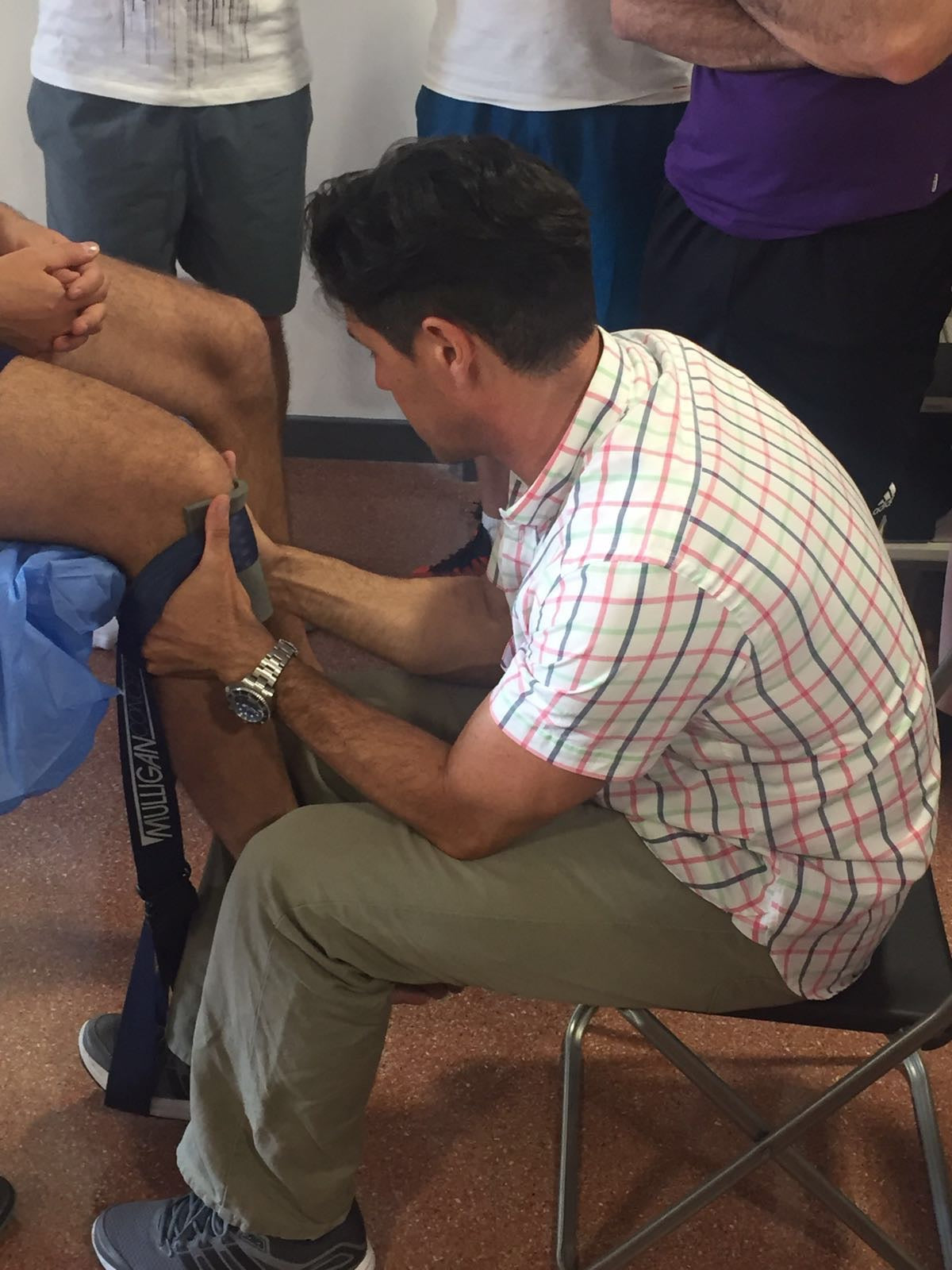
Présentation de la formation neurodynamique par Alfio Albasini


Alfio ALBASINI
PT, MSc. Physiothérapeute (1991, Ecole de Physiothérapie de Bâle en Suisse). Post Graduate Diploma in Manual Therapy (1995, à the Curtin University of Technology. Perth WA, Australie). Formateur certifié Approche McConnell. Formateur senior certifié Neurodynamique.
Depuis 1996, Alfio Albasini est praticien dans son cabinet à Bellinzone, chef-lieu du canton du Tessin en Suisse. Il enseigne à mi-temps, la thérapie manuelle à l'Ecole de Physiothérapie de l'Université de Suisse Italienne (USI, Università della Svizzera Italiana).Depuis 1997, après avoir été assistant pendant 3 ans à Zurzach au Centre de formation Suisse du concept de Maitland, il est devenu officiellement formateur McConnell. Actuellement, il enseigne le concept McConnell dans différents pays à travers le monde, comme l'Amérique du Sud, l'Afrique du Sud, le Moyen-Orient et en Europe dans 4 différentes langues.Depuis 1999, il est enseignant à l'Association Suisse de Football (SFV) comme expert en physiothérapie et médecine du sportDepuis 2006, Alfio Albasini a été l'assistant personnel de Michael Shacklock, NDS, neurodynamic solution , dans différents séminaires de formations à travers le monde. Alfio a été membre de la Recherche et Développement (Cercle Excellence Clinique) du groupe Otto Bock Health Care depuis 2006.En 2005 et en 2009, il a été le principal président du comité scientifique et d'organisation du premier et second congrès mondial de Thérapie Manuelle "The Spine" qui s'est tenu à Rome en Italie.Au niveau international, il a été invité à de nombreux congrès dans le Monde comme intervenant et pour différents séminaires de formations.Depuis 2007, Alfio a travaillé avec Kim Robinson et Toby Hall, membres du groupe "Manual Concept" de l'Université de Curtin en Australie, il a enseigné dans le programme, “The Certificate”. En 2009, Alfio a été invité par la direction du Real de Madrid pour présenter une session de formation de 6 jours divisés en différentes sections pour l'équipe médicale. En Octobre 2009, son premier livre a été présenté à Edimbourg (Ecosse) au cours de la conférence Kinetic Control : Using Whole Body Vibration in Physical Therapy and Sport.Elsevier Churchill LivingstoneEn mai 2010, il intervient pour la première fois en France au sein de "Kpten, une pratique avancée fondée sur les preuves".
Avis des participants
-
Formation très complète
Avec de la littérature. Application immédiate pour les patients
Anonyme -
Alfio au Top !
À la prochaine pour les membres inférieurs !
Anonyme -
Formation très intéressante
Cette formation va vraiment améliorer ma pratique quotidienne. Très bonne explication de raisonnement clinique
Anonyme -
Très bon formateur !
Mise en pratique directe en retour de formation
Anonyme